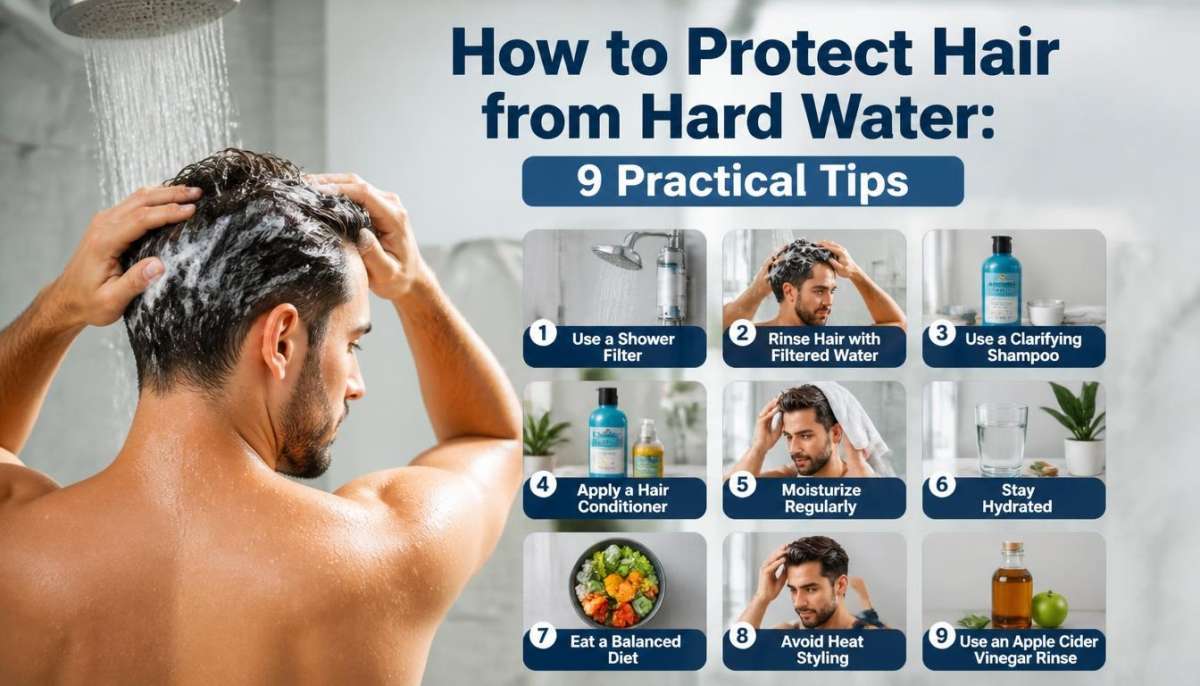
How to Protect Hair from Hard Water: 9 Practical Tips
Have you ever washed your hair and noticed that it still feels rough, dry, or difficult to manage? The problem might not be your shampoo or conditioner. The water coming from your shower could be contributing to these issues.
Hard water contains higher levels of dissolved minerals, particularly calcium and magnesium. When you regularly wash your hair with it, mineral deposits may accumulate on the hair surface and interact with your hair-care products. Over time, this can make some hair types feel rough, dull, tangled, and harder to manage.
If you live in an area with a hard water supply, changing your entire hair-care routine may not be necessary. A few practical adjustments, such as using a suitable water-softening system, choosing the right shampoo, and conditioning regularly, can help manage mineral buildup and reduce dryness.
In this guide, you’ll learn how to protect hair from hard water, recognize possible signs of mineral buildup, and choose simple methods to keep your hair manageable and healthy-looking.
What Is Hard Water and How Does It Affect Your Hair?
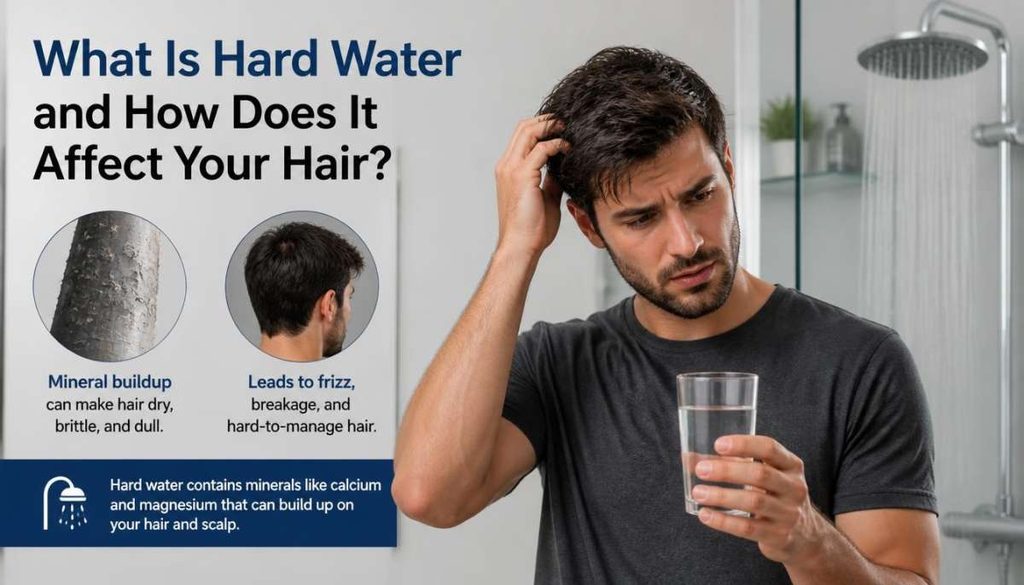
Hard water is water that contains relatively high concentrations of dissolved minerals, mainly calcium and magnesium. These minerals enter groundwater as it moves through rocks and soil containing mineral deposits.
Unlike soft water, which contains lower concentrations of these minerals, hard water can leave deposits on surfaces, bathroom fixtures, and hair.
When you wash your hair with hard water, minerals may remain on the hair surface. They can also interact with soaps and certain shampoo ingredients, making it harder to rinse away product residue.
This may contribute to several hair-care problems:
- Dryness: Mineral deposits and product interactions may leave some hair feeling rough or less manageable.
- Frizz: Hair that feels rough or becomes tangled more easily may appear frizzier.
- Dullness: Accumulated deposits can affect how smoothly hair reflects light.
- Tangles: Rough-feeling strands may catch against each other during brushing and styling.
- Breakage: Repeated tangling and friction can make fragile hair more vulnerable to mechanical damage.
Research on hard water and hair has produced mixed findings, but some studies have found increased mineral deposits and reduced hair strength under experimental conditions. This suggests that hard water may contribute to breakage, although its effects can vary between individuals and hair types.
Signs That Hard Water May Be Affecting Your Hair
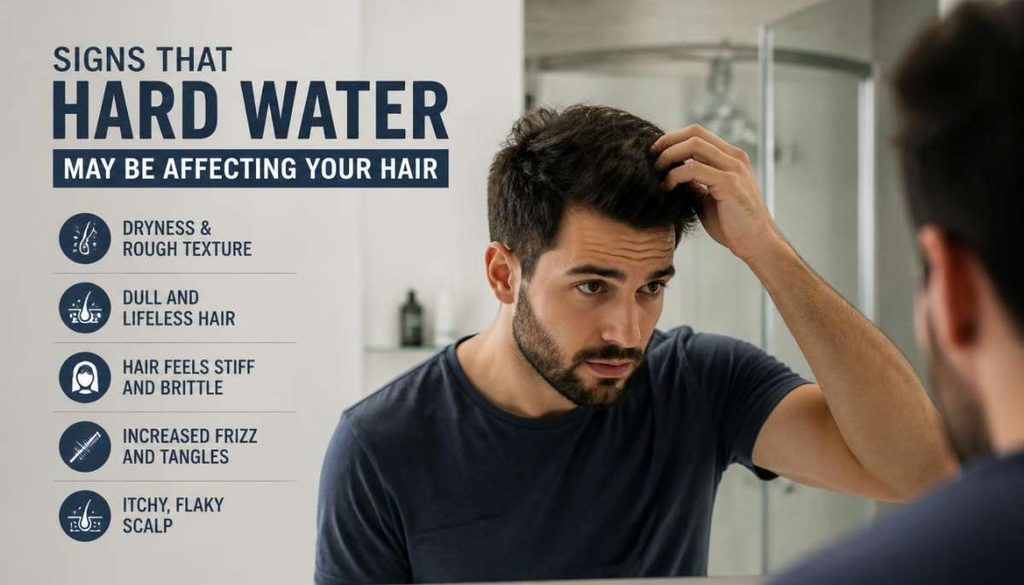
Hard water does not cause the same symptoms in everyone. Your hair texture, existing damage, washing habits, and the mineral concentration of your water can all influence how your hair responds.
Here are some signs worth paying attention to.
1. Dryness and Rough Texture
One common complaint among people using hard water is that their hair feels rough or unusually dry after washing.
You may notice that your strands no longer feel as soft as they did before. Even after applying conditioner, your hair might seem difficult to smooth or style.
Mineral deposits and interactions with cleansing products may contribute to this feeling, although other factors, including excessive heat styling and unsuitable shampoos, can cause similar problems.
2. Frizz and Difficult-to-Manage Hair
If your hair becomes frizzy shortly after washing, hard water could be one possible factor.
Mineral buildup may affect how your hair feels and how easily individual strands move against each other. This can make already dry, curly, or damaged hair harder to manage.
You might also notice more tangles when combing or brushing, especially around the ends.
3. Mineral and Product Buildup
Hard water minerals can accumulate on hair surfaces, and their interaction with certain hair-care products may contribute to residue.
Some people notice that their hair feels coated even after washing. Others find that their usual shampoo does not leave their hair feeling as clean as expected.
If you also notice mineral deposits around faucets, showerheads, or bathroom fixtures, it may be worth checking your water hardness.
4. Dullness and Tangling
Healthy-looking hair usually reflects light relatively evenly. When hair becomes coated with residue or develops a rough surface, it may look less shiny.
You might notice that your hair appears dull, feels heavier, or becomes tangled more easily than usual.
These symptoms are not proof of hard water damage, but they can be reasons to review your water supply and hair-care routine.
How to Protect Hair from Hard Water: 9 Effective Methods
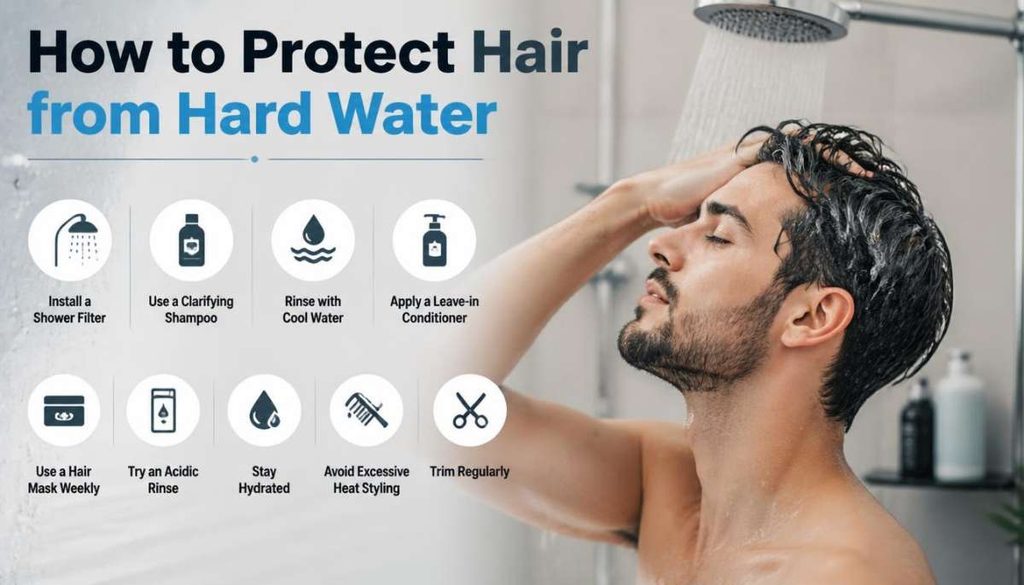
You do not necessarily need to stop using your regular shower or purchase an expensive collection of hair products.
The goal is to reduce unnecessary mineral exposure where possible, remove accumulated deposits appropriately, and protect your hair from dryness and breakage.
1. Install a Suitable Water Softener
If your household has consistently hard water, addressing the water supply itself can be one of the most useful long-term approaches.
A water softener designed to reduce hardness typically uses an ion-exchange process. It replaces calcium and magnesium ions with other ions, commonly sodium, reducing the mineral concentration responsible for water hardness.
Depending on your household needs, you can consider:
- A whole-house water softener.
- A point-of-use water-softening system.
- A suitable water-treatment system designed for your water supply.
Before purchasing anything, test your water to understand its hardness level. This helps you choose equipment that addresses the actual problem rather than spending money on a product that may not provide the desired result.
A properly sized and maintained water softener can help reduce mineral exposure every time you wash your hair.
2. Consider a Shower Filter
A shower filter is another option people consider when dealing with hard water.
However, it is important to understand that not every shower filter removes calcium and magnesium. Many shower filters are designed primarily to reduce chlorine, sediments, or certain other contaminants.
If your main concern is water hardness, check whether the product has independently verified performance for reducing calcium and magnesium. Do not assume that a filter advertised as having multiple filtration stages actually softens water.
A shower filter may still be useful for other water-quality concerns, but a properly designed water softener is generally a more reliable solution for reducing hardness.
Replace filter cartridges according to the manufacturer’s instructions to maintain their intended performance.
3. Use a Chelating Shampoo to Remove Mineral Buildup
Regular shampoos clean away oil, sweat, and everyday dirt, but they may not remove mineral deposits as effectively as products designed for that purpose.
This is where chelating shampoos can help.
Chelating ingredients bind to certain metal ions, helping remove mineral deposits from hair during washing.
Look for products specifically labeled as chelating or designed for hard-water mineral removal. Some formulas contain ingredients such as EDTA or related chelating agents.
Use the product according to its instructions rather than applying it every day. Some clarifying and chelating shampoos can leave hair feeling dry, particularly if it is already damaged, bleached, or naturally dry.
After washing, apply a suitable conditioner to restore softness and improve manageability.
4. Apply a Deep Conditioning Hair Mask
Regular conditioning is important when your hair feels rough, dry, or difficult to manage.
A deep-conditioning hair mask can help improve softness, reduce tangling, and make strands easier to comb.
Choose a mask based on your hair’s needs:
- Dry hair: Look for moisturizing ingredients such as glycerin, panthenol, and conditioning oils.
- Curly hair: Choose richer formulas that provide slip and help manage tangles.
- Color-treated hair: Look for products formulated for chemically treated hair.
- Fine hair: Choose lightweight masks that condition without leaving excessive residue.
Apply the mask mainly to the lengths and ends unless the product is specifically designed for scalp use.
Follow the recommended application time and rinse thoroughly. A hair mask will not remove the underlying water hardness, but it can help manage the dryness and roughness associated with your hair-care routine.
5. Use a Leave-In Conditioner After Washing
A leave-in conditioner can provide additional conditioning after you finish washing your hair.
Unlike rinse-out conditioners, leave-in products remain on the hair until the next wash. They can help reduce friction, improve detangling, and make strands easier to manage.
This can be particularly helpful if your hair is curly, thick, chemically treated, or prone to dryness.
For better results:
- Gently remove excess water with a clean towel.
- Apply a small amount of leave-in conditioner to damp hair.
- Distribute it evenly through the lengths and ends.
- Use a wide-tooth comb to remove tangles gently.
- Allow your hair to dry without excessive heat.
Avoid applying too much product because heavy buildup can make your hair feel coated again.
6. Try a Filtered or Distilled Water Final Rinse
If you cannot install a whole-house water softener, using lower-mineral water for your final rinse is another option.
After washing and conditioning your hair with tap water, you can pour a small amount of distilled or appropriately filtered water over your hair.
This may help reduce the amount of mineral-containing tap water left on the hair after washing.
A few things to remember:
- Use clean water from a reliable source.
- Make sure the water is suitable for personal use.
- Use enough water to rinse the hair evenly.
- Do not assume that every household filter removes hardness minerals.
This method is relatively simple for people who want to experiment with reducing their hair’s exposure to hard water without changing their entire plumbing system.
7. Adjust Your Hair Washing Routine
Your washing technique can make a difference in how manageable your hair feels.
If you live in an area with hard water, focus on cleansing your scalp properly while avoiding unnecessary stripping of the hair lengths.
Try these adjustments:
- Use a gentle shampoo suitable for your scalp.
- Massage the scalp with your fingertips rather than scratching it.
- Rinse thoroughly to remove shampoo and conditioner residue.
- Use a chelating wash when needed rather than at every wash.
- Avoid excessively hot water.
- Apply conditioner to the lengths and ends after shampooing.
You should also choose your washing frequency according to your scalp type and lifestyle. Oily scalps may require more frequent washing, while dry or curly hair may need a different schedule.
The aim is to maintain a clean scalp and manageable hair without overusing harsh cleansing products.
8. Protect Your Hair with Pre-Wash Care
Pre-wash care can help reduce tangling and make your hair easier to handle after washing.
For example, applying a suitable conditioner or pre-wash treatment to the lengths and ends may help improve slip and reduce friction during shampooing.
Some people also use lightweight oils before washing.
These products do not soften hard water or prevent all mineral deposits, but they may help reduce friction and improve the feel of dry hair.
If you have a sensitive scalp, avoid applying unfamiliar oils or treatments directly to the skin. Stop using any product that causes irritation.]
Also Read : Why Does My Hair Smell Bad After I Wash It? Causes and Solutions
9. Reduce Heat Styling and Prevent Breakage
Hair that already feels dry or rough may be more vulnerable to breakage from excessive heat and mechanical stress.
Regularly using flat irons, curling tools, or very hot blow dryers can make the problem worse.
You can protect your hair by:
- Using heat tools less frequently.
- Applying a suitable heat protectant before styling.
- Choosing a moderate temperature setting.
- Avoiding repeated passes over the same section.
- Detangling gently, starting from the ends.
- Avoiding tight hairstyles that create unnecessary tension.
These habits will not change the hardness of your water, but they can help prevent additional damage while you work on your hair-care routine.
How to Protect Hair from Hard Water Naturally
If you prefer simple, low-cost methods, there are several ways to manage your hair without immediately purchasing specialized equipment.
However, natural treatments should not be confused with actual water softening. They may improve the feel of your hair, but they cannot reliably remove calcium and magnesium from your household water supply.
Here are some practical options.
Use distilled water for a final rinse: Distilled water contains very low levels of dissolved minerals. Using it for the final rinse may reduce additional mineral exposure after washing.
Apply a moisturizing hair mask: A homemade or store-bought conditioning mask can help improve softness and reduce tangling. Choose ingredients and products that suit your hair type.
Use a gentle cleansing routine: Avoid repeatedly using strong clarifying shampoos. Clean your scalp as needed and use a moisturizing conditioner afterward.
Try lightweight pre-wash oiling: A small amount of suitable hair oil applied to the lengths may help reduce friction during washing. It does not remove hard water minerals or replace a water softener.
Avoid excessive heat: Let your hair air-dry when practical and use moderate heat settings when styling.
Can Apple Cider Vinegar Remove Hard Water Buildup?
Apple cider vinegar is a popular home remedy for dull or rough hair. Its acidity may temporarily change how the hair surface feels, but it is not a proven substitute for a chelating shampoo or water-softening system.
Undiluted vinegar can irritate the scalp and skin. Even diluted rinses may not suit everyone, particularly people with sensitive or damaged scalps.
If you want to try an acidic hair product, choose a professionally formulated product designed for hair use and follow its directions.
For substantial mineral buildup, a suitable chelating product is generally a more targeted option.
Does Oiling Your Hair Protect It from Hard Water?
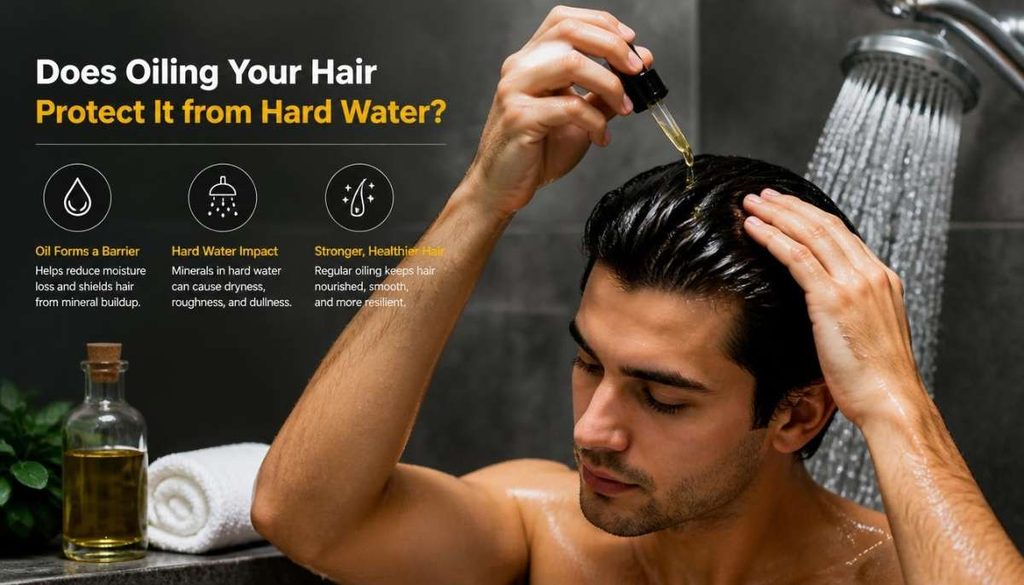
Oiling your hair may help reduce friction and improve the feel of dry strands, but it does not prevent hard water from depositing minerals on your hair.
Some oils can provide lubrication and help reduce mechanical damage during washing and detangling.
For example, you can apply a small amount of coconut oil or another suitable hair oil to the lengths and ends before washing if your hair responds well to it.
However, oiling has limitations:
- It does not remove calcium and magnesium from water.
- It does not replace a chelating shampoo.
- Excessive application can make hair feel greasy.
- Some oils may be unsuitable for sensitive scalps.
Think of oiling as an additional conditioning step rather than a complete hard-water protection method.
Can Hard Water Cause Hair Loss?
Many people associate hard water with increased hair shedding, but it is important to distinguish between hair shedding and hair breakage.
Hair shedding happens when strands naturally fall from the follicles. Hair breakage occurs when the hair shaft snaps along its length.
Some laboratory studies have found that exposure to hard water can increase mineral deposits on hair and may reduce its tensile strength. This suggests a possible connection between hard water and increased breakage.
However, the evidence does not establish that ordinary hard water exposure directly causes permanent hair loss or damages hair follicles.
If you notice shorter broken strands, rough ends, and increased tangling, hair-shaft damage may be contributing to the problem.
On the other hand, visible thinning, widening part lines, or excessive shedding may have other causes, including genetics, hormonal changes, nutritional deficiencies, stress, or scalp conditions.
If hair loss continues or becomes noticeable, consult a dermatologist rather than assuming hard water is responsible.
Hard Water vs. Soft Water: What’s the Difference?
The main difference between hard and soft water is their concentration of dissolved minerals, particularly calcium and magnesium.
| Feature | Hard Water | Soft Water |
|---|---|---|
| Mineral content | Higher calcium and magnesium | Lower calcium and magnesium |
| Soap lather | Often produces less lather | Usually produces more lather |
| Mineral deposits | More likely to leave deposits | Less likely to leave mineral deposits |
| Hair feel | May feel coated or rough | May feel easier to rinse |
| Cleaning | May require more effort to remove soap residue | Generally allows easier soap rinsing |
Soft water does not automatically make everyone’s hair healthier, and individual results can vary.
However, reducing excessive mineral exposure may make hair easier to cleanse and manage, especially if you regularly experience hard-water-related buildup.
Frequently Asked Questions
How do I stop hard water from ruining my hair?
Use a suitable water-softening system if your water is very hard, wash with a chelating shampoo occasionally, and condition your hair regularly. A final rinse with distilled water may also help reduce mineral exposure.
How can I reduce water hardness for my hair?
A properly designed ion-exchange water softener can reduce calcium and magnesium levels. Shower filters may help with certain contaminants, but ordinary filters do not necessarily soften hard water.
What are the signs of hard water damage on hair?
Common complaints include rough texture, dryness, dullness, tangling, and increased breakage. These symptoms can also have other causes, so consider your overall hair-care routine and water quality.
Can I remove hard water buildup naturally?
You can try a distilled-water final rinse and a suitable moisturizing treatment. However, natural remedies such as vinegar and oils are not reliable replacements for chelating shampoos when removing mineral deposits.
Is hard water hair damage reversible?
Hair that feels rough because of removable mineral buildup may become more manageable after appropriate cleansing and conditioning. However, damaged hair shafts cannot biologically repair themselves. Reducing further damage and allowing new hair to grow are important.
Which shampoo is best for hard water?
A chelating shampoo specifically formulated to remove mineral deposits is a useful option. Look for products containing suitable chelating ingredients, such as EDTA. Follow the product instructions and condition afterward.
Does a shower filter remove hard water minerals?
Not necessarily. Many shower filters primarily target chlorine, sediments, and certain contaminants. A water softener designed to exchange calcium and magnesium ions is generally more effective for reducing water hardness.
Can hard water cause hair thinning?
Hard water may contribute to hair-shaft deposits and breakage, but current evidence does not establish it as a direct cause of permanent follicular hair loss. Persistent thinning should be evaluated by a dermatologist.
Protect Your Hair by Managing Hard Water Exposure
Hard water can make hair care more challenging, particularly if your strands are already dry, curly, color-treated, or prone to breakage.
The best approach is to address mineral exposure while maintaining a balanced hair-care routine. Consider a suitable water softener, use a chelating shampoo when needed, and keep your hair moisturized with conditioners and leave-in treatments.
You do not need to try every treatment at once. Start with the changes that address your biggest concerns and observe how your hair responds.
With consistent care and the right water-treatment approach, you can make your hair easier to manage and reduce unnecessary dryness, buildup, and breakage.