
How to Air Dry Hair Without Frizz: 10 Easy Tips for Every Hair Type
Air drying your hair seems simple, but the results are not always what you expect. You wash your hair, leave it to dry naturally, and end up with frizz, puffiness, or uneven waves. Instead of looking smooth and defined, your hair may appear messy even when you have used your usual shampoo and conditioner.
The good news is that you do not need a blow dryer to get a smoother finish. The way you remove excess water, apply styling products, detangle your strands, and handle your hair while it dries can make a noticeable difference.
If you want to learn how to air dry hair without frizz, the key is to work with your natural hair texture instead of fighting it. Straight, wavy, and curly hair each need slightly different techniques, but a few basic habits can help improve the final result.
Here are ten practical tips to help you air dry your hair while keeping it soft, manageable, and naturally styled.
Why Does Hair Become Frizzy When Air Drying?
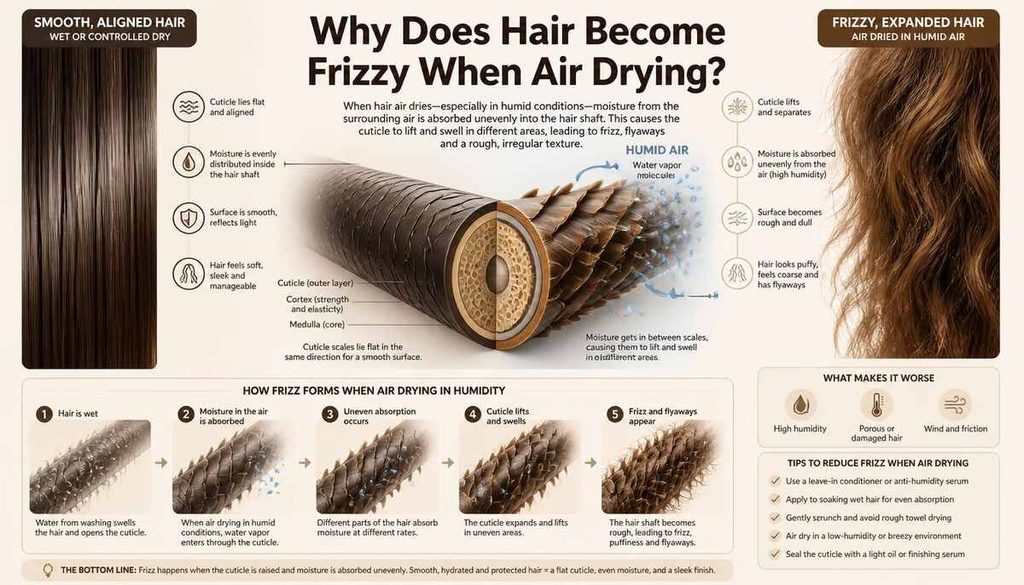
Frizz happens when individual hair strands become uneven, rough, or raised instead of lying smoothly together. Moisture, hair damage, natural texture, and styling habits can all contribute to the problem.
When hair is wet, it becomes more vulnerable to stretching and friction. Rough towel drying, excessive brushing, and frequent touching can disturb the hair’s natural pattern.
How Moisture Affects Hair Frizz
Hair can absorb moisture from the surrounding environment. In humid conditions, some hair types become more prone to swelling and frizz because water interacts with the hair structure.
This is particularly noticeable in wavy, curly, and naturally dry hair. Strands may lose definition, become puffy, or develop uneven textures as they dry.
Using a suitable conditioner and styling product can help improve manageability. However, no product can completely prevent humidity related frizz for every hair type.
Why Hair Texture Matters
Your natural hair texture influences how your hair behaves during air drying.
Straight hair may become flat or develop small flyaways. Wavy hair can lose its shape and become puffy. Curly hair may experience dryness, tangles, and less defined curls.
Understanding your texture helps you choose the right drying method. A technique that works well for straight hair may not provide the same results for thick curls.
Common Reasons for Frizz After Washing
Several everyday habits can make frizz worse:
- Rubbing wet hair with a rough towel
- Using shampoo that leaves hair feeling dry
- Skipping conditioner
- Brushing hair repeatedly while it dries
- Applying too much styling product
- Touching hair before it is completely dry
- Using products that do not suit your hair texture
Changing a few of these habits can make your air drying routine much easier.
How to Air Dry Hair Without Frizz: Step by Step
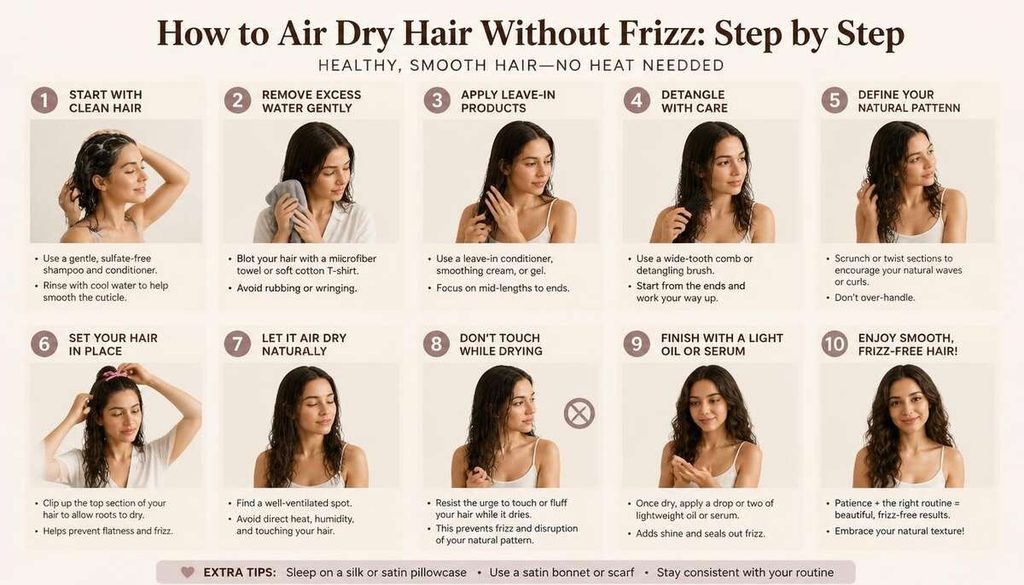
A smooth air drying routine starts immediately after washing. Follow these ten steps to help your hair dry with less frizz and better natural definition.
1. Choose the Right Shampoo and Conditioner
Your air drying results begin in the shower.
Choose a shampoo that suits your scalp and hair type. If your hair feels dry or rough after washing, a gentle moisturizing formula may be more suitable than a strongly cleansing product.
Always follow with conditioner, especially if your hair is dry, curly, color treated, or prone to tangling.
Apply conditioner mainly to the mid lengths and ends. Leave it on for the recommended time before rinsing thoroughly.
A good conditioner helps reduce friction between strands, making wet hair easier to manage.
2. Avoid Rubbing Hair with a Regular Towel
One of the easiest ways to reduce frizz is to stop rubbing your hair aggressively after washing.
Regular towels can create friction, especially when you press and twist wet strands repeatedly. This may disturb the natural hair pattern and contribute to tangles.
Instead, gently squeeze excess water from your hair using your hands.
You can also use a soft microfiber towel or a clean cotton T shirt to absorb moisture without excessive rubbing.
3. Gently Remove Excess Water
Hair does not need to remain dripping wet before you apply styling products.
After washing, gently press your hair with a microfiber towel or cotton T shirt. Work from the roots toward the ends without twisting or pulling.
Avoid trying to make your hair completely dry with the towel. The goal is to remove extra water while leaving enough moisture for your styling products to spread evenly.
This step is particularly useful for curly and wavy hair because it helps preserve natural texture.
4. Apply a Leave In Conditioner
A leave in conditioner can help soften hair and improve manageability during air drying.
Apply a small amount to damp hair, focusing on the middle sections and ends. Use your fingers or a wide tooth comb to distribute it evenly.
Fine hair may need a lightweight formula, while thick or curly hair may benefit from a richer product.
Start with a small amount. Applying too much can make hair feel heavy or greasy.
5. Use a Suitable Anti Frizz Product
If your hair regularly becomes puffy or difficult to manage, an anti frizz cream or lightweight styling product may help.
Choose a formula according to your hair texture.
For example:
- Fine hair may respond better to lightweight creams or sprays.
- Thick hair may need a richer smoothing cream.
- Wavy hair may benefit from a lightweight curl defining product.
- Curly hair may need a moisturizing styling cream or gel.
Apply the product while your hair is still damp. Follow the product instructions and avoid combining too many formulas at once.
6. Detangle Hair While It Is Damp
Tangles can make air drying more difficult, especially when hair has a naturally wavy or curly pattern.
Use a wide tooth comb or your fingers to gently remove knots. Start at the ends and gradually work upward toward the roots.
Do not pull through stubborn tangles. Add a little conditioner or detangling product if needed.
For tightly curled hair, finger detangling or using a suitable wide tooth comb with conditioner may be more comfortable than brushing dry strands.
7. Choose the Right Parting and Hairstyle
The way you position your hair while it dries can affect its final shape.
If you prefer a natural look, create your usual parting while the hair is damp. Use your fingers to arrange the strands instead of repeatedly brushing them.
For layered hairstyles, pay attention to how the shorter sections fall around your face.
For example, if you have a layered style such as a butterfly haircut for medium hair, gently arrange the face framing layers while damp so they dry with a natural shape.
Avoid pulling wet hair tightly into a ponytail or bun if you want to maintain its natural volume.
8. Avoid Touching Your Hair While It Dries
This is one of the most important habits for reducing frizz.
Once you have applied your styling products and arranged your hair, try to leave it alone.
Repeatedly running your fingers through damp hair can separate strands and disturb natural waves or curls. It can also create extra friction.
If you need to move your hair away from your face, make small adjustments rather than constantly restyling it.
Allowing your hair to dry without unnecessary handling can help preserve its natural shape.
9. Let Hair Dry Naturally with Enough Airflow
Choose a comfortable place where your hair can dry naturally.
Avoid keeping wet hair pressed against a pillow, chair, or thick clothing for long periods. These surfaces can create friction and slow down drying.
If your hair is thick, gently separate the layers with your fingers to allow better airflow.
You can also avoid wearing tight hats or covering your hair while it is still wet.
Remember that air drying time varies depending on hair thickness, length, density, and the surrounding environment.
10. Finish with a Lightweight Hair Serum
When your hair is completely dry, a small amount of lightweight serum may help smooth flyaways and improve the appearance of the ends.
Rub one or two drops between your palms and gently apply them to the mid lengths and ends.
Avoid applying too much product near the roots, especially if your hair becomes oily quickly.
Serums can improve the feel and appearance of dry hair, but they do not repair structural damage or guarantee that humidity will not cause frizz.
How to Air Dry Different Hair Types Without Frizz
Your hair texture determines which techniques are likely to work best. Adjust your routine rather than following the same method for every hair type.
How to Air Dry Straight Hair
Straight hair can become flat at the roots or develop flyaways during air drying.
To improve the result:
- Use a lightweight conditioner.
- Remove excess water gently.
- Apply a small amount of leave in conditioner.
- Arrange your parting while hair is damp.
- Avoid applying heavy creams near the roots.
- Leave your hair alone while it dries.
If you want more volume, gently lift the roots with your fingers before leaving the hair to dry.
How to Air Dry Wavy Hair
Wavy hair often needs help maintaining its natural pattern.
Apply a lightweight curl cream or styling mousse to damp hair. Gently scrunch the lengths upward using your palms to encourage the waves.
Avoid brushing the hair repeatedly after styling because this can separate the wave pattern.
Once your hair is dry, you can gently loosen the waves with your fingers if they feel stiff from styling product.
How to Air Dry Curly Hair
Curly hair often needs more moisture and careful handling.
Apply a leave in conditioner or curl defining cream to damp hair. Distribute the product evenly and gently scrunch the curls.
Avoid rough towel drying and excessive brushing.
If your curls become tangled, detangle them gently while wet and conditioned rather than trying to remove knots after the hair dries.
Patience is important because thick curls may take several hours to dry completely.
How to Air Dry Thick Hair
Thick hair can take longer to dry because more strands hold moisture.
After washing, divide your hair into manageable sections and gently squeeze out excess water.
Apply products in smaller sections to make distribution easier. Avoid using too much cream or oil because heavy layers may make the hair feel greasy.
Give your hair enough time and airflow to dry completely before tying it up.
How to Air Dry Fine Hair
Fine hair can become weighed down by rich conditioners and heavy styling products.
Use lightweight formulas and apply them mainly to the ends.
Avoid excessive serum, thick creams, and too much oil. These products may make fine hair appear flat.
For a little extra volume, arrange the roots with your fingers and allow them to dry without pressing the hair against your scalp.
Best Products for Frizz Free Air Drying
You do not need a large collection of products to air dry your hair. A few suitable options can help improve softness, manageability, and natural definition.
Leave In Conditioner
Leave in conditioner is useful when your hair needs extra softness after washing.
It can help reduce tangles and make strands easier to style. Choose a lightweight formula for fine hair and a more moisturizing option for thick or curly hair.
Anti Frizz Cream
Anti frizz creams help smooth the appearance of unruly strands and make hair easier to manage.
Apply a small amount to damp hair, focusing on the areas that usually become puffy.
Avoid using more product than necessary because excess cream can make your hair feel heavy.
Lightweight Hair Serum
Hair serum can help improve shine and reduce the appearance of flyaways.
It is often most useful as a finishing product once the hair is dry. Use a small amount and distribute it evenly through the ends.
Curl Defining Cream
People with naturally wavy or curly hair may benefit from curl defining cream.
These products help support the natural curl pattern and can reduce the appearance of puffiness when used correctly.
Choose a formula that provides the level of hold and moisture your hair needs.
Microfiber Hair Towel
A microfiber towel is a useful tool for reducing friction during the drying process.
It helps absorb excess water without requiring aggressive rubbing.
A clean, soft cotton T shirt can also be a practical alternative if you do not have a microfiber towel.
Microfiber Towel vs. Regular Towel for Air Drying Hair
The towel you use after washing can influence how your hair looks while drying.
Benefits of Microfiber Towels
Microfiber towels are designed to absorb water efficiently. Their soft texture can make them a gentler option for handling wet hair.
They are especially useful for people who regularly experience tangles, frizz, or disturbed curls after towel drying.
Use gentle pressing and squeezing motions rather than twisting your hair tightly inside the towel.
Can You Use a Cotton T Shirt to Dry Hair?
Yes. A clean cotton T shirt can be a useful alternative to a regular bath towel.
The smooth fabric can reduce friction compared with rough towel rubbing. It is also easy to use at home.
Place your hair inside the shirt and gently press to absorb extra water. Avoid twisting or pulling the fabric tightly.
Which Option Is Better for Frizzy Hair?
Both microfiber towels and soft cotton T shirts can work well.
Microfiber may be more convenient for absorbing larger amounts of water, while a cotton T shirt can be a simple alternative for gentle drying.
The most important factor is how you handle your hair. Even a soft towel can cause unnecessary friction if you rub aggressively.
Common Air Drying Mistakes That Make Hair Frizzy
Changing your products may not solve the problem if your daily habits continue to create friction and dryness.
Here are some mistakes to avoid.
Brushing Hair Too Much While Drying
Repeated brushing can disturb natural waves and curls. It may also separate strands and create a puffier appearance.
Detangle your hair gently while it is damp, then allow it to dry without unnecessary brushing.
Applying Too Much Hair Product
More product does not always mean better results.
Heavy layers of creams, oils, and serums can make hair greasy, flat, or difficult to manage.
Start with small amounts and add more only when necessary.
Sleeping with Wet Hair
Going to bed with very wet hair can increase friction as you move against your pillow.
It may also leave your hair damp for an extended period.
Whenever possible, allow your hair to dry substantially before sleeping. If you must sleep with slightly damp hair, use a smooth pillowcase and avoid tying your hair tightly.
Frequently Touching or Scrunching Hair
Scrunching can help define waves and curls during styling, but repeatedly touching the hair throughout the drying process can disturb the result.
Apply your styling product, arrange your hair, and let it dry with minimal handling.
Using the Wrong Products for Your Hair Type
A heavy cream may work well for thick curls but feel too rich for fine straight hair.
Similarly, a lightweight spray may not provide enough moisture for very dry hair.
Choose products according to your texture, density, and specific needs.
How Long Does Hair Take to Air Dry?
There is no exact drying time that applies to everyone. Hair length, thickness, density, texture, and humidity all influence how quickly it dries.
Air Drying Time for Fine and Straight Hair
Fine, short, or low density hair may dry relatively quickly. Depending on the environment and amount of water remaining, it may take around 30 minutes to two hours.
Longer straight hair can take more time, especially when it is dense.
Air Drying Time for Thick and Curly Hair
Thick and curly hair often takes longer because water can remain trapped between layers and within dense sections.
It may take several hours to dry fully, particularly in humid weather.
Avoid tying up or covering very wet hair for extended periods.
Factors That Affect Hair Drying Time
Several factors influence drying speed:
- Hair length
- Hair thickness and density
- Amount of water left after towel drying
- Indoor temperature
- Air circulation
- Humidity
- Amount and type of styling products
If your hair regularly takes a long time to dry, gently removing excess water and allowing better airflow can help.
FAQs About Air Drying Hair Without Frizz
Is It Better to Air Dry Hair or Blow Dry It?
Neither method is automatically better for everyone. Air drying avoids direct heat exposure, while careful blow drying with a suitable heat protectant and moderate temperature can help some people achieve their preferred style. The best option depends on your hair condition, routine, and styling goals.
How Can I Air Dry My Hair Without It Getting Puffy?
Use conditioner after washing, remove excess water gently, and apply a suitable leave in product. Avoid brushing or touching your hair repeatedly while it dries. Choosing products that match your natural texture can also help reduce puffiness.
Should I Apply Hair Oil Before Air Drying?
You can use a small amount of suitable hair oil if your hair is dry or prone to frizz. However, too much oil may make your hair look greasy or weighed down. Apply it according to the product instructions and your hair’s needs.
Can I Air Dry My Hair Every Day?
Yes, many people air dry their hair regularly. However, make sure your hair has enough time to dry and avoid keeping it wet or tightly tied for extended periods. Use a routine that keeps your scalp and hair comfortable.
Does Air Drying Cause Frizz?
Air drying itself does not automatically cause frizz. Friction, humidity, dryness, damaged strands, and unsuitable styling habits can contribute to frizz during the process. Gentle handling and appropriate products may improve the result.
Should I Brush My Hair Before or After Air Drying?
It is usually easier to detangle straight and wavy hair while it is damp using a suitable comb. Curly hair may benefit from gentle detangling while wet and conditioned. Avoid aggressive brushing after the hair dries, especially if you want to preserve natural waves or curls.
Get Smooth, Natural Looking Hair Without Heat
Learning how to air dry hair without frizz is mainly about using the right techniques and understanding your natural texture.
Start with a suitable shampoo and conditioner, remove excess water gently, and apply products that match your hair type. Avoid rough towel drying, repeated brushing, and unnecessary touching while your hair dries.
Straight, wavy, and curly hair all need slightly different care, so give yourself time to find a routine that works.
You do not need complicated styling tools or a shelf full of products to improve your results. Consistent, gentle hair care can help your natural texture look smoother, softer, and easier to manage.