
What Do Layers Do for Hair? Benefits, Drawbacks & How to Know If You Need Them
If you’ve ever wondered what do layers do for hair, the simple answer is that they change the way your hair sits, moves, and carries weight.
Instead of cutting all the hair to one length, a layered haircut uses different lengths throughout the hair. That difference can make thick hair feel lighter, give flat hair more movement, bring out waves and curls, or create softer pieces around the face.
But layers aren’t automatically better for everyone.
The right amount of layering depends on your hair’s thickness, texture, length, and the look you want. Too many layers can sometimes make fine hair appear less full, while the right layers can give thick or textured hair much more shape.
What Do Layers Do for Hair?
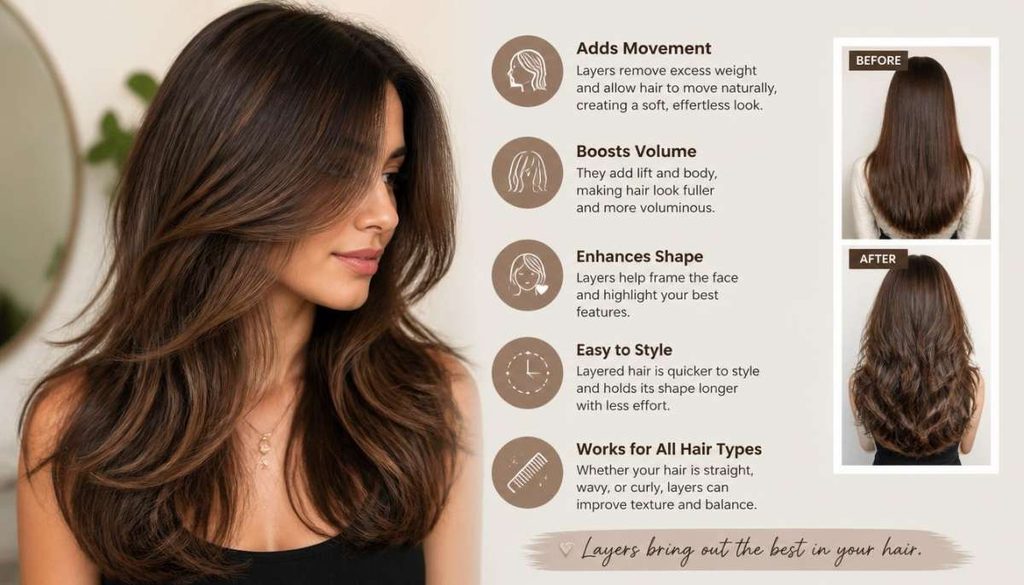
Layers remove some of the weight from different sections of the hair so that the hair does not all fall as one solid shape.
Think about a one-length haircut. Most of the weight sits toward the bottom, which can give the hair a strong and uniform appearance. Layers break that pattern by introducing shorter sections that can move more freely.
That can change several things at once.
Layers Remove Excess Weight
This is one of the biggest reasons people choose layers.
If your hair is thick or dense, having everything cut to one length can make the ends feel heavy. Longer layers can remove some of that weight while allowing you to keep much of your overall length.
Layers Add Movement
Hair with one length can sometimes look quite static.
Different lengths create separation between sections, so the hair can move more naturally when you walk, style it, or simply run your fingers through it.
Layers Can Add Volume
Layers can give flat or fine-looking hair more lift by reducing the weight that pulls sections downward.
The effect depends on how the layers are placed. Removing too much hair from fine hair can have the opposite effect, so the cut needs to be tailored to the person’s natural density.
Layers Bring Out Natural Texture
Waves and curls can sometimes look weighed down when too much hair sits on top of them.
Strategic layers can allow textured sections to move and spring up more freely.
Layers Create Shape
A layered haircut can give hair more structure without making it look completely blunt.
Layers can also be used around the front to create softer transitions around the face.
Layers Can Frame the Face
Face-framing layers are shorter pieces positioned around the front of the hair.
They can draw attention toward the eyes, cheekbones, or jawline and can be adjusted according to the overall haircut.
Also Read : Brazilian Blowout: The Complete Guide to Smooth, Frizz-Free Hair
What Are the Benefits of Layered Hair?
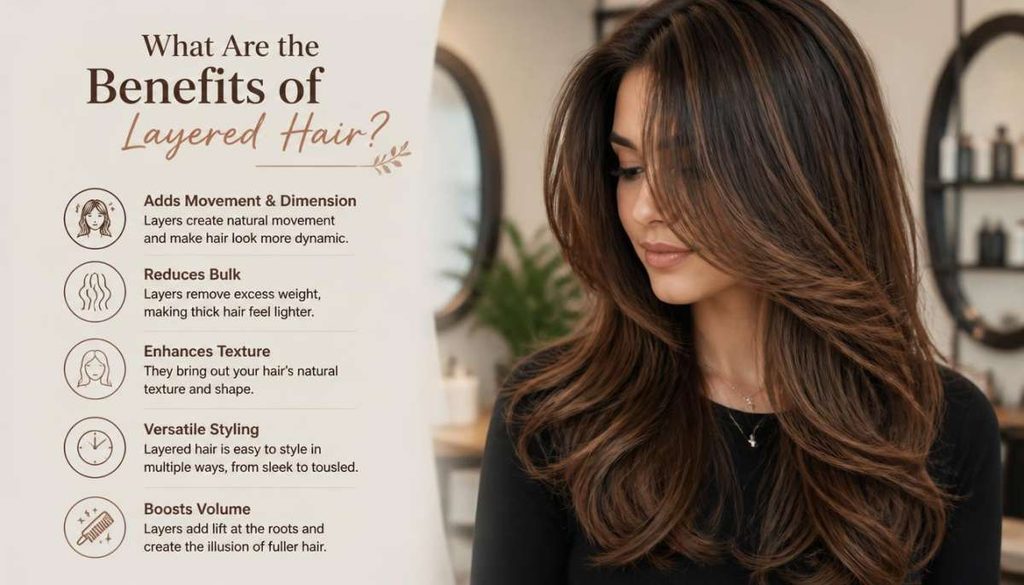
The biggest advantage of layers is flexibility. They can be used to solve different hair problems rather than creating one identical result for everyone.
Layers Add Bounce and Movement
If your hair tends to hang straight down without much movement, layers can make the shape feel more dynamic.
This can be especially noticeable when the hair is styled with waves or loose texture.
Layers Reduce Bulk in Thick Hair
Thick hair can look heavy when there is too much weight concentrated toward the ends.
Long or strategically placed layers can make dense hair feel lighter without requiring a dramatic reduction in overall length.
Layers Enhance Waves and Curls
Natural texture often responds differently when weight is removed.
Waves can become more visible, while curls may have more room to form instead of being pulled down by excessive weight.
The exact result depends on the curl pattern and how the layers are cut.
Layers Create Shape Without Losing Most of Your Length
This is a major reason people choose long layers.
You can keep much of your length while changing the way the hair moves and falls.
That can be a useful middle ground if you want a different haircut but aren’t ready for a major chop.
Layers Can Soften a Haircut
A blunt cut creates a strong line.
Layers can create a softer transition between different sections of the hair, particularly around the face.
What Are the Disadvantages of Layered Hair?
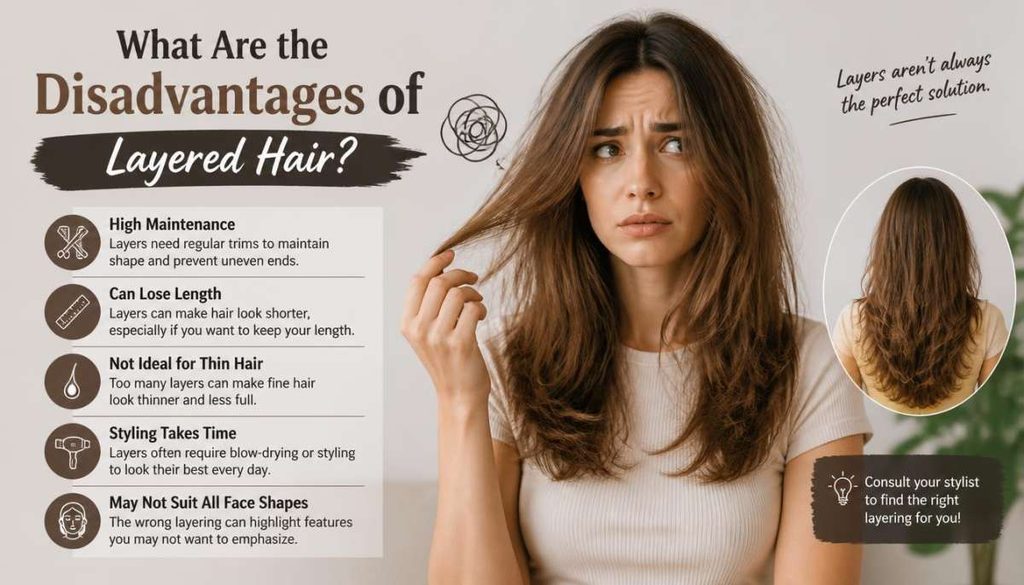
Layers can be useful, but they aren’t automatically the right choice.
A haircut that works beautifully for one person might be frustrating for someone with a different hair type or styling routine.
Layers Can Require More Styling
Shorter pieces can behave differently from the rest of your hair.
You might need to spend a little more time blow-drying, curling, straightening, or using styling products to get the exact shape you want.
Short Layers Can Fall Out of Updos
If you regularly wear ponytails, buns, or braids, shorter layers may escape from the style.
Some people love those loose pieces around the face. Others prefer all their hair to stay neatly secured.
Growing Out Layers Takes Time
If you decide you no longer want layers, you cannot instantly return to a one-length haircut.
The shorter sections have to grow out, and the shape can look different at different stages.
Too Many Layers Can Reduce the Appearance of Fullness
This is particularly relevant for fine or low-density hair.
If too much hair is removed, the ends can look thinner than you intended.
Layers Can Emphasize Frizz
In some hair types, shorter pieces can create more visible flyaways or frizz.
That doesn’t mean people with frizzy hair cannot have layers. It simply means the cut and styling approach need to work with the hair’s natural behavior.
Do Layers Work for Every Hair Type?

Yes, layers can be adapted to many hair types, but the best approach changes depending on the hair.
There isn’t one universal layered haircut that works equally well for everyone.
Layers for Fine or Thin Hair
Fine hair needs a little more care when adding layers.
Too much layering can remove the visual density from the ends. Subtle layers or carefully placed pieces can add movement without making the hair look unnecessarily sparse.
If your main goal is to make your hair look fuller, tell your stylist that before deciding how much layering you want.
Layers for Thick Hair
Thick hair is often a good candidate for layering because layers can help distribute weight.
Longer layers can reduce that heavy feeling while keeping the hair relatively long.
The goal is usually to create movement without making the haircut look uneven or overly choppy.
Layers for Straight Hair
Layers can make straight hair look less uniform.
Because straight hair shows changes in length clearly, the placement of each layer can have a noticeable effect on the final shape.
Long layers can create subtle movement, while shorter layers produce a more obvious change.
Layers for Wavy Hair
Wavy hair can benefit from layers because removing some weight may allow natural waves to move more freely.
The important part is avoiding a shape that doesn’t match the natural pattern of the waves.
Your stylist should consider how your hair behaves when it dries naturally, not just how it looks when wet.
Layers for Curly Hair
Curly hair can look very different depending on where layers are placed.
Well-planned layers can give curls more bounce and help prevent the hair from forming a heavy shape toward the bottom.
Curl shrinkage also matters. Hair can appear much shorter when it dries, so the cutting approach needs to account for the natural curl pattern.
Layers for Coily Hair
Coily hair can also be layered, but the technique should be chosen around the hair’s natural density, shrinkage, and curl pattern.
The goal is to create shape while respecting the way the hair naturally contracts and expands.
A stylist experienced with coily textures can help determine how much layering makes sense.
How Do I Know If I Need Layers?
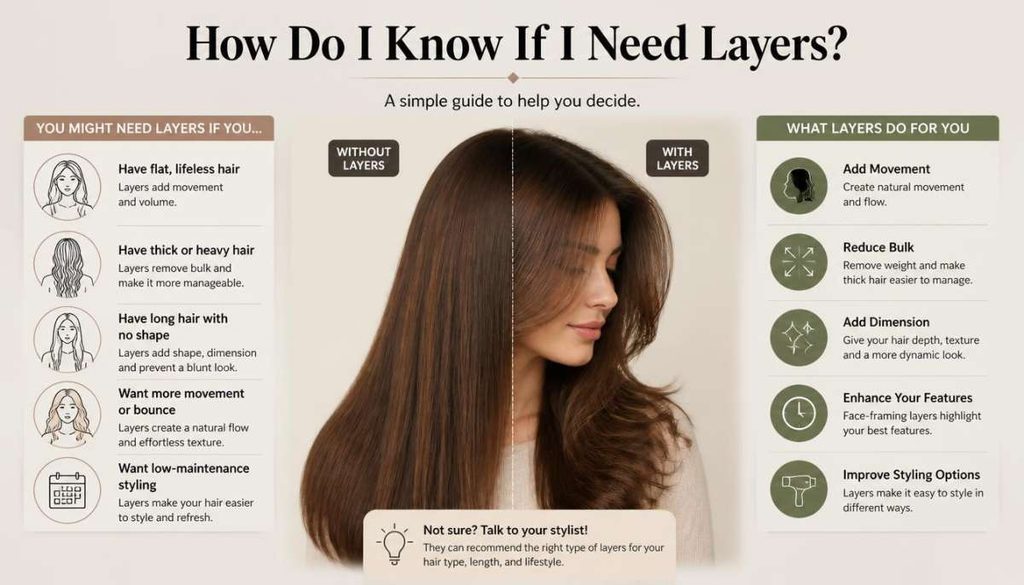
You don’t need layers simply because they are popular.
Think about what you want your hair to do.
You may want layers if:
- Your hair feels heavy
- The ends look bulky
- Your hair falls too flat
- You want more movement
- Your waves or curls feel weighed down
- You want more shape around your face
- You want to change your haircut without losing most of your length
On the other hand, fewer layers may suit you better if:
- Your hair is very fine and you want maximum-looking density
- You prefer a blunt haircut
- You want a very simple styling routine
- You usually wear your hair in one-length styles
- You don’t like shorter pieces around your face
The easiest way to decide is to start with the result you want rather than the name of the haircut.
Is Hair Better With or Without Layers?
Neither option is automatically better.
It depends on what you want from your hair.
Layers can be a better choice if you want:
- Movement
- Shape
- Volume
- Texture
- Less bulk
- Face-framing pieces
A one-length cut may be a better choice if you want:
- A blunt appearance
- Strong-looking ends
- Maximum visual density
- Simple styling
- A more uniform shape
There is also a middle ground.
You don’t have to choose between completely blunt hair and heavily layered hair. A stylist can create subtle long layers that change the movement without dramatically changing the overall silhouette.
Which Type of Layers Should You Get?
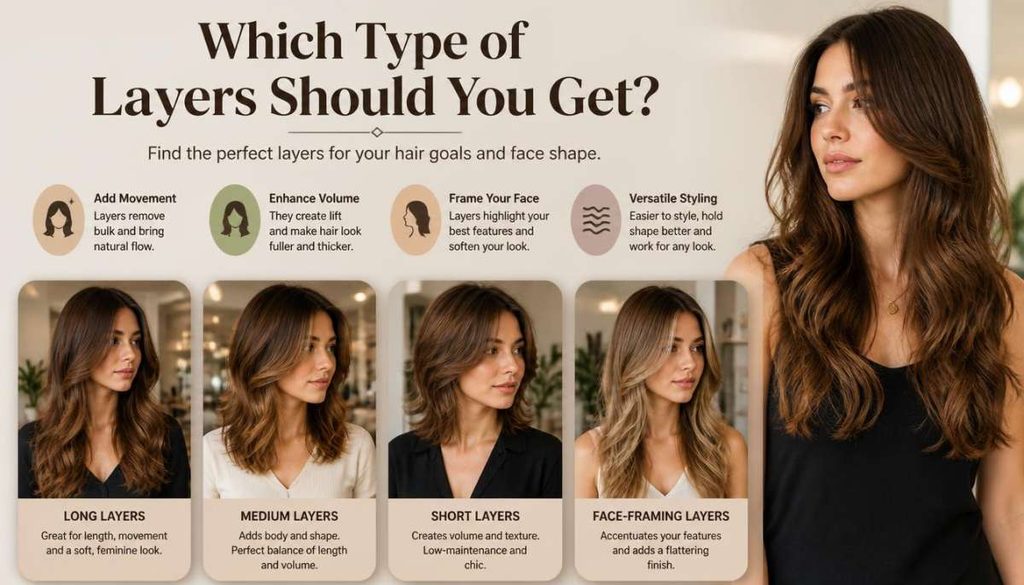
Different layer styles create different effects, so the name alone doesn’t tell the whole story.
Long Layers
Long layers create a more subtle change between lengths.
They’re useful when you want movement while keeping most of your hair long.
Short Layers
Shorter layers create more noticeable changes in shape and movement.
They can add lift and texture but may also require more styling.
Face-Framing Layers
These focus on the hair around the face.
The starting point can be adjusted depending on which facial features you want to highlight and how much framing you want.
Internal Layers
Internal layers remove some weight within the haircut without necessarily creating obvious short pieces around the outside.
They can be useful when someone wants movement while keeping a relatively solid outer shape.
Feathered Layers
Feathered layers create soft, flowing transitions.
They can give the haircut a lighter appearance and work especially well when a softer finish is desired.
Butterfly Layers
Butterfly-style layering combines shorter pieces around the face and longer lengths through the rest of the hair.
It creates noticeable movement while allowing you to keep considerable length.
Choppy Layers
Choppy layers create a more textured and deliberately uneven appearance.
They can work well for people who want a less polished and more lived-in finish.
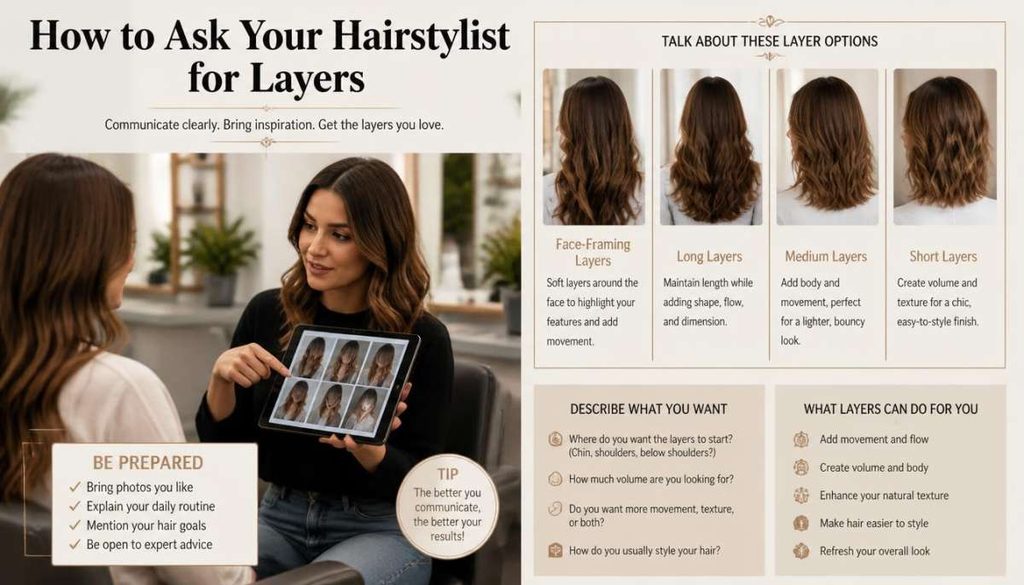
How to Ask Your Hairstylist for Layers
Saying “I want layers” isn’t always enough.
Two people can ask for layers and walk away with completely different haircuts.
Before your appointment, think about what you actually want the layers to accomplish.
Tell your stylist:
- How much length you want to keep
- Whether you want more volume or less bulk
- Where you want face framing to begin
- How much styling you’re willing to do
- Whether you normally wear your hair straight, wavy, or curly
- Whether you regularly wear ponytails, buns, or braids
Bring a few reference photos if you can.
It’s also useful to explain what you don’t want. If you want subtle movement but don’t want short pieces around your face, say that clearly.
The more specific the conversation, the easier it is to create a haircut that fits your expectations.
How to Maintain Layered Hair
Layered hair doesn’t require a complicated routine, but the maintenance depends on how noticeable your layers are.
Keep Up With Trims
Regular trims help maintain the intended shape.
How often you need one depends on your haircut, hair growth, and how quickly you notice changes in the shape. Many layered styles are refreshed around every six to eight weeks, although this isn’t a strict rule for everyone.
Use Products That Match Your Hair Type
Fine hair may need lightweight products that don’t flatten it.
Curly or wavy hair may benefit from products designed to support natural texture and control frizz.
The right product depends more on your hair type than simply having layers.
Protect Hair From Heat
If you regularly use a blow dryer, straightener, or curling tool, use appropriate heat protection and avoid excessive heat.
Layers can expose more individual sections to styling, so maintaining the condition of the ends matters.
Style With Your Natural Texture
One of the easiest ways to make layers work is to understand how your hair naturally behaves.
Wavy and curly hair may look best when allowed to form its natural pattern. Straight hair may show the shape of the layers more clearly with a smooth finish.
Give Growing Layers Time
If you’re growing your layers out, the shape may look slightly different during the process.
You don’t necessarily need to cut everything back to one length. Your stylist can gradually adjust the shape as the shorter sections catch up.
Frequently Asked Questions About Hair Layers
Do layers make hair look thicker?
They can make some hair appear fuller by creating movement and lift. However, too much layering can make fine or low-density hair look less full, so the amount and placement matter.
Do layers make hair look thinner?
They can make thick hair feel and look lighter because some weight is removed. If too many layers are cut into fine hair, the ends may appear thinner.
Do layers make thick hair lighter?
Yes. One of the main reasons people with thick hair choose layers is to reduce excess weight and create more movement.
Do layers damage your hair?
Cutting layers does not inherently damage healthy hair. Damage is more commonly associated with things such as excessive heat, chemical processing, or rough handling. However, a poorly suited haircut can create styling problems even when the hair itself remains healthy.
Do layers make hair grow faster?
No. Layers change the haircut and how the hair looks and moves. They do not make hair grow faster.
Are layers good for thin hair?
They can be, but subtle layering is usually more suitable when maintaining the appearance of fullness is a priority. Heavy layering can remove too much visual density.
Are layers good for curly hair?
They can work very well for curly hair when the shape is designed around the natural curl pattern. Proper placement can help curls move and prevent excessive weight at the bottom.
The Right Layers Should Work With Your Hair
So, what do layers do for hair? They change how the weight is distributed, which can affect movement, volume, texture, shape, and the way the hair frames your face.
But the best layered haircut isn’t necessarily the one with the most layers.
Think about what you want to change. If your hair feels too heavy, layers can help remove bulk. If it looks flat, strategic layering may create more movement. If you love your natural waves or curls, the right shape can help them show up more clearly.
And if you prefer thick-looking ends and simple styling, a one-length or lightly layered haircut might suit you better.
The goal is not simply to have layers. It’s to have a haircut that works with your hair, your routine, and the way you actually like to wear it.