
Why Does My Hair Get Greasy Fast? Causes and Easy Fixes
You wash your hair in the morning, enjoy that fresh, clean feeling, and then notice your roots looking oily again before the day is over. If this sounds familiar, you might wonder why your hair gets greasy so quickly, even when you wash it regularly.
The answer usually comes down to a combination of natural scalp oil, hair texture, your washing routine, and the products you use. Your scalp produces an oil called sebum that helps keep your skin and hair moisturized. However, when oil builds up at the roots, your hair can start looking flat, shiny, or stringy sooner than you would like.
The good news is that greasy hair does not automatically mean your hair is unhealthy or that you are doing something wrong. Understanding what causes the buildup can help you find a routine that keeps your hair feeling fresh for longer.
Why Does My Hair Get Greasy Fast?
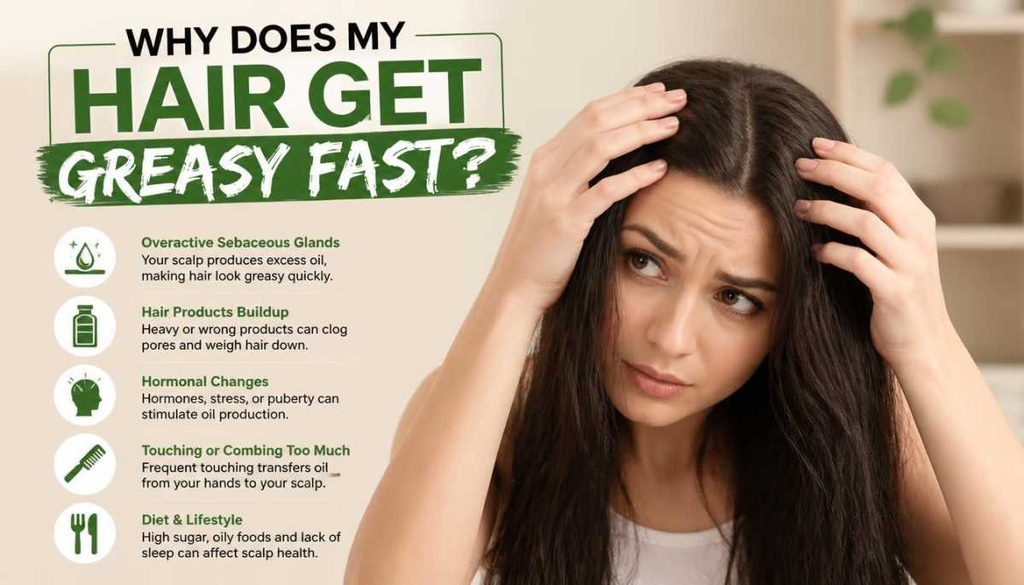
Hair gets greasy quickly when sebum accumulates on the scalp and spreads along the hair strands. Some people naturally produce more scalp oil than others, while certain hair types make that oil more noticeable.
Your hair may also become greasy faster because of product residue, an unsuitable washing routine, frequent touching, or changes in hormones and the environment.
Here are the most common reasons to consider.
Your Scalp Naturally Produces More Oil
Your scalp contains sebaceous glands that produce sebum. This natural oil helps protect the skin and prevent excessive dryness.
However, the amount of oil your scalp produces varies from person to person. If your glands produce plenty of sebum, your roots may look greasy only a short time after washing.
Genetics can influence this tendency, so someone else might comfortably go several days between washes while your hair needs cleaning more frequently.
Your Hair Is Fine or Straight
Hair texture can make a noticeable difference in how quickly grease becomes visible.
Fine hair has a smaller diameter than coarse hair, so even a relatively small amount of oil can make it look flat or separated. Straight hair also allows oil to travel along the strands more easily than many curly or coily hair types.
This does not mean straight or fine hair is less healthy. It simply means that oil may become noticeable sooner.
You Are Using Too Much Hair Product
Heavy conditioners, styling creams, hair oils, waxes, and leave in products can leave residue behind, especially when applied close to the roots.
If your hair looks greasy even after washing, product buildup could be part of the problem.
Try using smaller amounts of styling products and applying conditioner mainly to the middle lengths and ends rather than directly to the scalp, unless the product is specifically designed for scalp use.
Your Shampoo Is Not Cleaning Your Scalp Effectively
Sometimes, the problem is not how often you wash your hair but how you wash it.
If shampoo is not distributed through the scalp properly, excess oil and styling residue may remain. Using a large amount of conditioner near the roots can also make the hair feel heavy immediately after washing.
Focus your shampoo on the scalp, massage gently with your fingertips, and rinse thoroughly. You generally do not need to scrub aggressively to remove everyday oil.
Hormonal Changes Are Affecting Your Scalp
Hormones can influence sebum production, which means your hair may become oilier during certain periods of life.
Puberty, menstrual cycle changes, and other hormonal fluctuations can affect how your scalp behaves. Stress may also contribute to changes in your skin and hair routine.
If the greasiness appears suddenly alongside other unusual symptoms, consider discussing it with a healthcare professional rather than assuming your shampoo is the only cause.
You Touch or Brush Your Hair Frequently
Running your fingers through your hair throughout the day can transfer oils from your hands onto the strands. Frequent brushing can also distribute existing scalp oil farther down the hair.
Neither habit automatically causes your scalp to produce more oil, but both can make greasiness more noticeable.
Try to avoid unnecessary touching, particularly if your roots become oily within a few hours of washing.
Heat, Humidity, and Sweat Are Contributing
Hot weather, humid conditions, exercise, and wearing hats for extended periods can make your scalp feel sweaty and your hair look less fresh.
Sweat and sebum are not the same thing, but they can accumulate together and affect how your roots feel.
If your hair becomes greasy after a workout, rinsing or washing your scalp when needed may help you feel more comfortable.
Also Read : Why Does My Hair Not Hold a Curl? 10 Reasons and Easy Fixes
How to Stop Your Hair From Getting Greasy So Fast
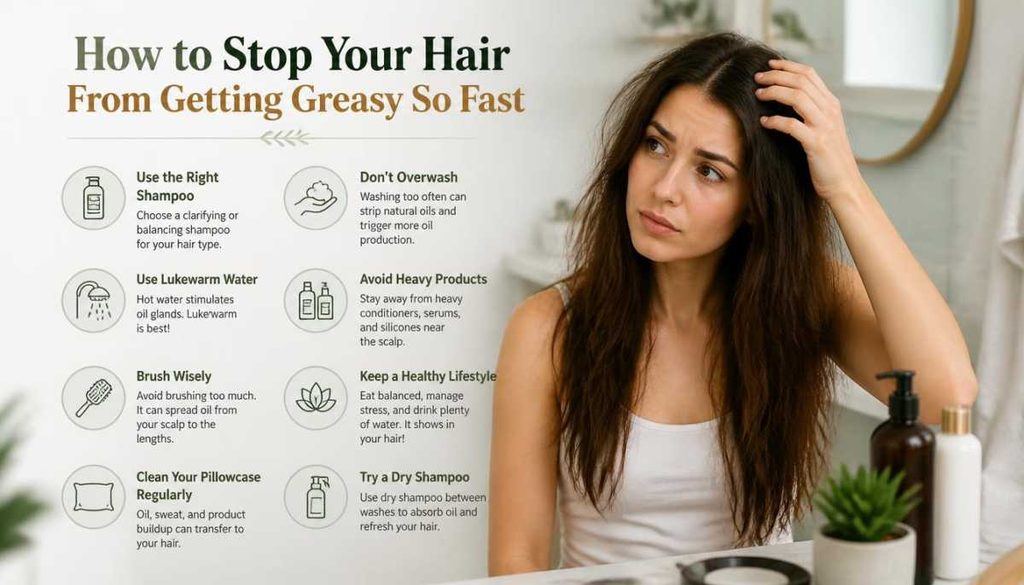
You do not necessarily need an expensive shampoo or an elaborate hair care routine to manage oily roots. Start by making a few practical changes and see how your scalp responds.
Find the Right Hair Washing Schedule
There is no single washing schedule that works for everyone.
If your scalp produces plenty of oil, washing daily may be perfectly reasonable. If your hair is drier or curlier, you may prefer washing less often.
The important thing is to clean your scalp as often as it needs it without causing irritation or excessive dryness.
Do not force yourself to wait several days between washes simply because someone else follows that routine.
Use Shampoo on Your Scalp
Your scalp is where most of the oil accumulates, so focus your shampoo there rather than piling it onto the ends.
Wet your hair thoroughly, apply an appropriate amount of shampoo, and gently massage your scalp with your fingertips. Rinse well before applying conditioner.
If your hair has heavy product buildup or is particularly oily, a second shampoo may sometimes help. However, double shampooing is not necessary for everyone.
Apply Conditioner to the Right Areas
Conditioner helps soften the hair and reduce friction, but some formulas can make fine or oily hair feel weighed down.
For most people with greasy roots, applying conditioner mainly to the middle lengths and ends is a useful starting point.
Use a lighter formula if your hair becomes flat shortly after washing. If you use a scalp specific conditioner or treatment, follow its directions rather than automatically avoiding the roots.
Choose Products for Your Hair Type
A rich moisturizing shampoo may work well for dry, coarse hair but feel too heavy on fine hair with oily roots.
Look for a shampoo that cleans effectively without leaving your scalp uncomfortable. Lightweight conditioners and styling products may also be easier to manage if your hair becomes greasy quickly.
You do not need to buy an entire matching product range. Start by changing the product most likely to be causing the problem.
Try a Clarifying Shampoo When Needed
If you regularly use dry shampoo, styling creams, hairspray, or other products, residue may accumulate over time.
A clarifying shampoo can help remove that buildup. How often you need one depends on your products, scalp, and hair texture.
Avoid using a strong clarifying formula too frequently if it leaves your hair dry or your scalp irritated. A clarifying wash is an occasional tool, not a requirement for everyone with oily hair.
Keep Your Hairbrush Clean
Brushes can collect loose hair, sebum, dust, and styling residue.
Remove trapped hair regularly and wash the brush according to its material and manufacturer’s instructions. Let it dry completely before using it again.
This simple habit can prevent old residue from being transferred back onto freshly washed hair.
Use Dry Shampoo as a Temporary Solution
Dry shampoo can absorb some surface oil and make roots look fresher between washes.
Apply it sparingly according to the product instructions, allow it to work, and brush or massage it through as directed.
Keep in mind that dry shampoo does not replace washing. If you rely on it repeatedly, product residue may build up and leave your scalp feeling uncomfortable.
Is My Hair Healthy If It Gets Greasy Fast?
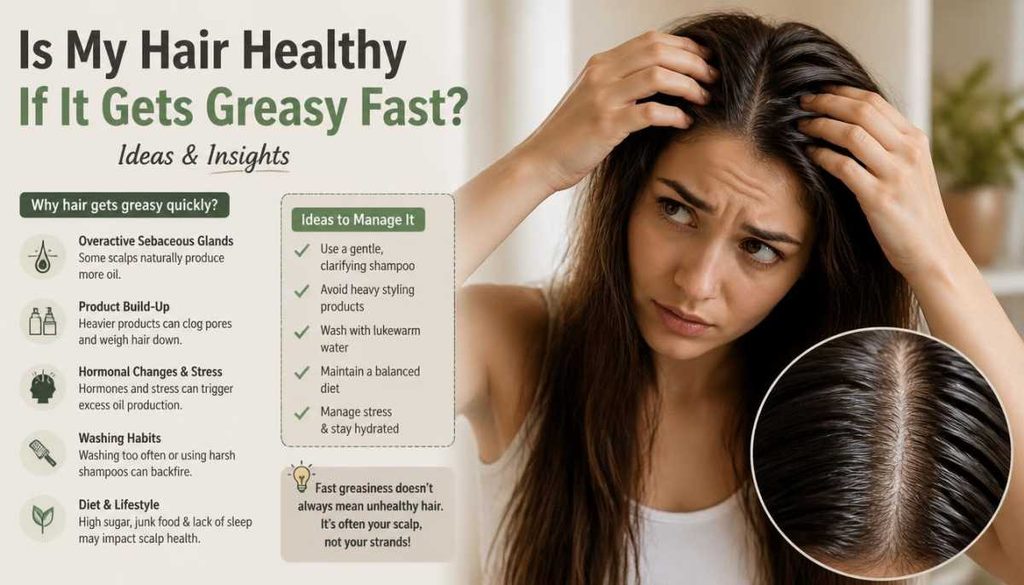
Yes, your hair can be healthy even if it gets greasy quickly.
Oily roots are often a normal result of natural sebum production, genetics, and hair texture. Greasiness by itself does not mean your hair is damaged, dirty, or unhealthy.
The condition of your scalp and hair depends on more than how long your roots stay fresh after washing.
Pay attention to other signs, such as persistent itching, redness, flaking, soreness, or unusual hair shedding. If these symptoms appear or continue despite reasonable changes to your routine, a dermatologist can help identify the cause.
It is also worth remembering that oil production and hair dryness can occur together. You can have an oily scalp and dry ends, particularly if your hair is long, chemically treated, or frequently exposed to heat styling.
Why Does My Hair Get Greasier When It Is Straight
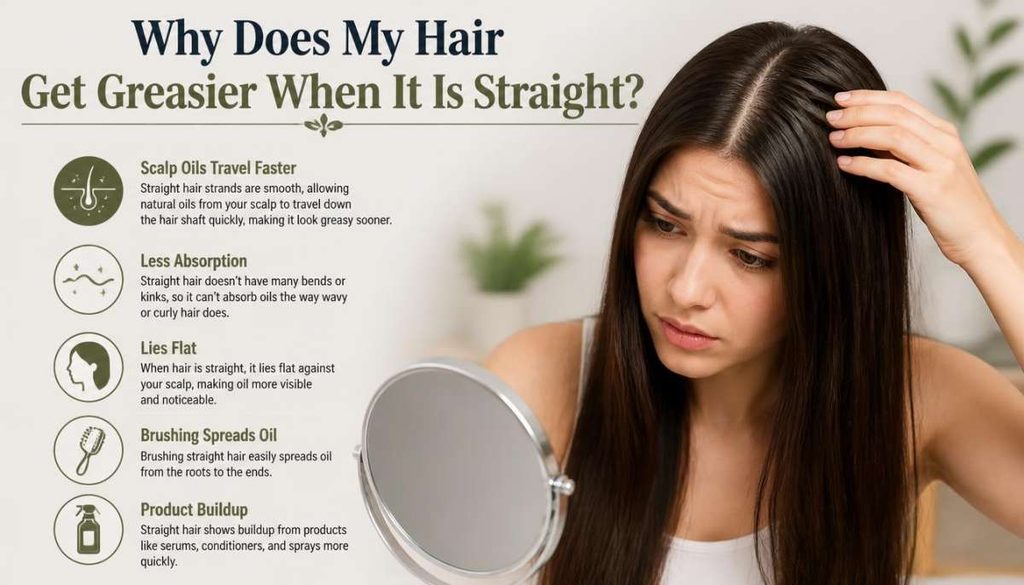
Straight hair can look greasy faster because scalp oil can travel down relatively straight strands without encountering as much of the bending and twisting found in curly hair.
Fine, straight hair may be particularly prone to looking flat because the oil can weigh down the strands and make them separate into small sections.
If your hair is naturally straight, a few adjustments may help:
- Choose lightweight shampoo and conditioner suited to your scalp and hair type.
- Apply conditioner mainly to the lengths and ends if your roots become oily.
- Avoid applying hair oils or heavy styling creams close to the scalp.
- Clean your brush regularly and avoid touching your hair throughout the day.
- Wash as often as your scalp needs rather than trying to stretch the time between washes.
You do not need to curl or texturize your hair just to hide oily roots. A suitable washing routine is a better starting point.
Can Washing Your Hair Too Often Make It Greasy?
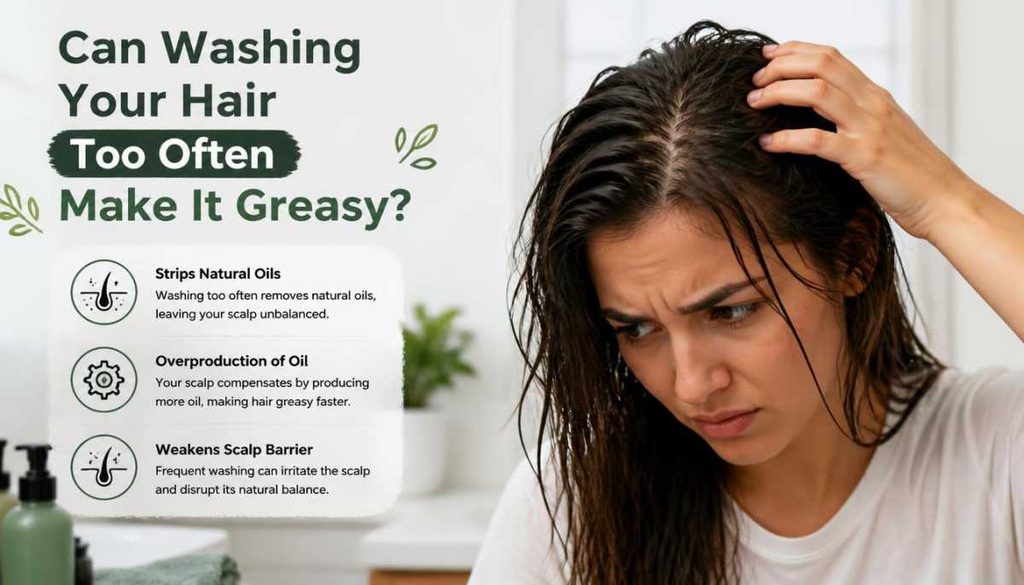
This is a common concern, but washing your hair frequently does not automatically make your scalp produce more oil.
Your scalp’s oil production is influenced by factors such as genetics and hormones. However, harsh shampoos or aggressive washing can irritate the scalp and leave your hair feeling dry.
If your hair gets oily every day, reducing your washing frequency may simply leave you uncomfortable without addressing the underlying reason.
Instead, choose a gentle shampoo that suits your scalp and wash when necessary. If you notice persistent dryness, itching, or irritation, reconsider the products and techniques you are using.
The goal is to remove excess oil without making your scalp uncomfortable.
Common Mistakes That Can Make Greasy Hair Worse
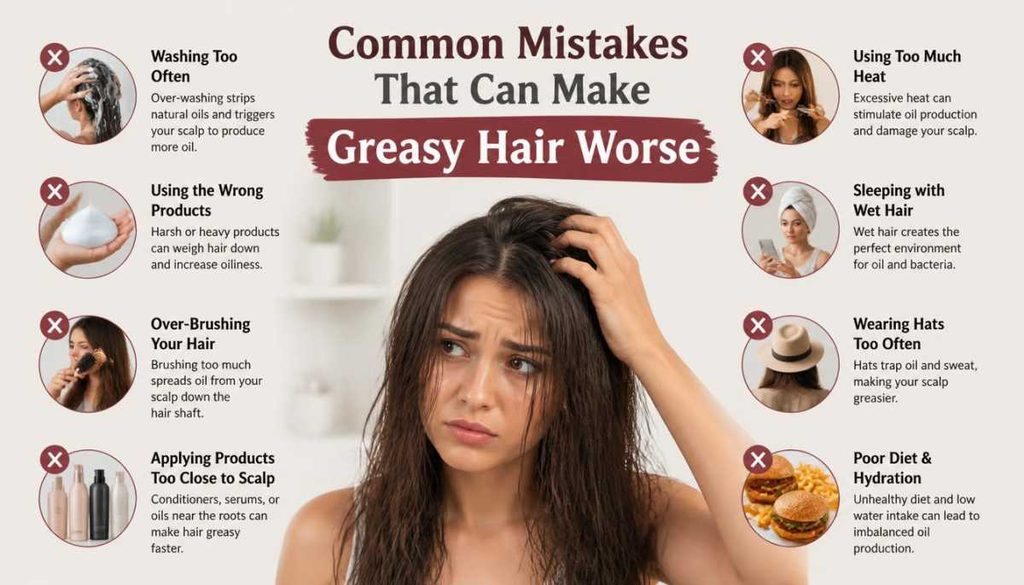
Sometimes, a few small habits are enough to make oily roots more noticeable.
Applying Hair Oil Directly to Oily Roots
Hair oils can be useful for certain hair types, but applying them to an already oily scalp may leave your roots looking heavier.
If you want to use hair oil, consider whether your scalp actually needs it and follow the product directions.
Using Too Much Conditioner
Applying a large amount of rich conditioner near the scalp can weigh down fine hair.
Try reducing the amount and concentrating on the areas that need the most softness.
Scrubbing Your Scalp Too Hard
Aggressive scrubbing can irritate the skin and make washing uncomfortable.
Use your fingertips rather than your nails and massage gently. You do not need to scratch the scalp to clean it.
Relying on Dry Shampoo Every Day
Dry shampoo can help between washes, but repeated use without proper cleansing can contribute to residue buildup.
Use it when useful, but continue washing your scalp according to its needs.
Changing Products Too Frequently
Switching shampoos every few days makes it difficult to understand what is actually helping.
Choose a suitable product, use it consistently for a reasonable period, and pay attention to how your scalp responds. Change your routine when there is a clear reason to do so.
When Should You See a Dermatologist About Greasy Hair?
Greasy hair alone is usually not a reason to worry. However, it may be worth seeking professional advice if the change is sudden, persistent, or accompanied by other scalp symptoms.
Consider getting help if you experience:
- Persistent itching or redness
- Thick or recurring scalp flakes
- Soreness, swelling, or irritated patches
- Unusual hair shedding or thinning
- Greasiness accompanied by other unexplained changes
A dermatologist can assess whether the issue is ordinary oil buildup, a scalp condition, irritation from hair products, or something else that needs treatment.
Avoid using harsh treatments or repeatedly scrubbing your scalp in an attempt to remove every trace of oil.
Frequently Asked Questions About Greasy Hair
How do I stop my hair from getting greasy so fast?
Use a shampoo suited to your scalp, wash as often as needed, apply conditioner mainly to the lengths if your roots become oily, and avoid heavy products near the scalp. Cleaning your brush and limiting unnecessary hair touching may also help.
Is my hair healthy if it gets greasy fast?
Yes. Fast greasiness can be completely normal and is often related to natural oil production, genetics, and hair texture. It does not automatically mean your hair is unhealthy.
How do I get my hair to stop being oily?
You may not be able to eliminate natural oil production, nor would you want to. Instead, focus on managing excess oil with an appropriate shampoo, a suitable washing schedule, lightweight products, and good scalp care.
Why does my hair get greasier when it is straight?
Straight hair allows sebum to travel down the strands more easily, and fine straight hair can become visibly flat when oil accumulates. This is mainly a difference in how the hair behaves, not necessarily a sign of poor hair health.
Should I wash greasy hair every day?
You can wash your hair daily if your scalp needs it and your shampoo is suitable for regular use. People with dry, curly, or textured hair may need a different schedule.
Does conditioner make hair greasy?
It can make hair feel greasy or heavy when the formula is too rich for your hair or when too much is applied near the roots. Using a lighter conditioner and adjusting where you apply it may help.
Does brushing make hair greasy?
Frequent brushing can distribute existing scalp oil along the hair strands. Dirty brushes may also transfer accumulated oil and styling residue, so cleaning your brush regularly is helpful.
Is dry shampoo enough to manage oily hair?
Dry shampoo can temporarily absorb oil and refresh the appearance of your roots, but it does not replace washing. Regular cleansing is still important for removing accumulated sebum, sweat, and product residue.
Why does my hair get greasy overnight?
Oil can accumulate while you sleep, particularly if your scalp naturally produces plenty of sebum. Product residue and contact with your pillowcase may also affect how your hair looks in the morning.
Does greasy hair mean I have a scalp problem?
Not necessarily. Greasiness alone is usually a normal variation in oil production. Persistent itching, redness, painful areas, or unusual shedding may indicate that your scalp needs professional assessment.
Keep Your Hair Fresh With a Routine That Works for You
If you keep wondering, “Why does my hair get greasy fast?”, start by looking at your scalp, washing habits, hair texture, and the products you use.
You may simply have a naturally oily scalp, or you may need to adjust how you shampoo and condition your hair. Small changes can often make your routine easier without requiring expensive products or complicated treatments.
Remember that clean hair does not have to stay completely oil free all day. Your scalp naturally produces sebum, and the goal is to manage excess buildup while keeping your hair and scalp comfortable.
Find a routine that suits your hair rather than forcing your hair to follow someone else’s schedule.