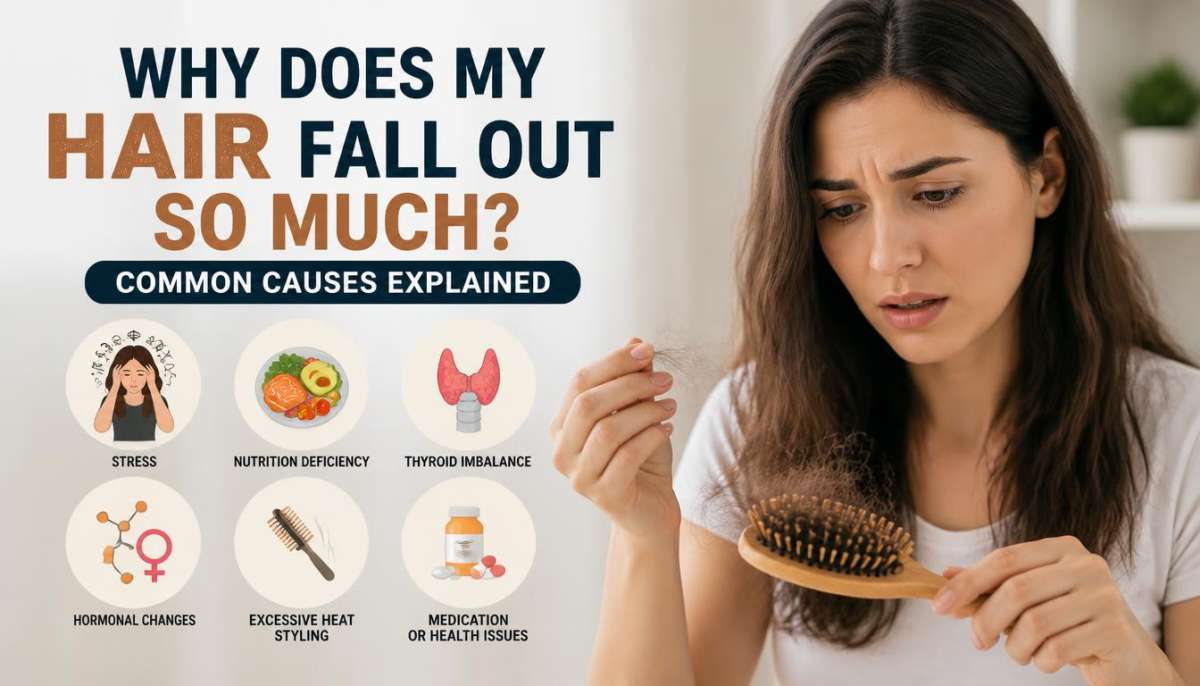
Why Does My Hair Fall Out So Much? Common Causes Explained
Finding more hair than usual on your pillow, in the shower, or on your hairbrush can be worrying. You might wonder whether your hair is becoming thinner or whether something is happening inside your body.
If you keep asking, “Why does my hair fall out so much?”, the answer depends on what is causing the shedding. Hair loss can be related to genetics, stress, hormonal changes, nutritional deficiencies, certain medications, or conditions that affect the scalp and hair follicles.
Losing some hair every day is normal. Many people shed around 50 to 100 hairs daily as part of the natural hair growth cycle. However, noticeable thinning, sudden shedding, or bald patches can indicate something different from ordinary hair shedding.
Understanding the possible causes can help explain why hair loss happens and why it may look different from one person to another.
Why Does My Hair Fall Out So Much?
Hair grows in a repeating cycle that includes active growth, a transition period, and a resting phase before the hair eventually falls out. New hairs usually continue growing as older hairs shed.
Hair loss becomes noticeable when more hairs than usual enter the shedding phase, when hair follicles produce progressively thinner strands, or when something interferes with normal hair growth.
The underlying reason is not always obvious from the amount of hair you see. For example, excessive shedding after an illness may have a different cause from gradual thinning around the hairline.
Some causes produce temporary shedding, while others can lead to ongoing hair loss. The pattern, timing, and condition of the scalp can provide important clues about what may be happening.
Also Read : Why Does My Hair Get Greasy Fast? Causes and Easy Fixes
What Are the Most Common Causes of Excessive Hair Loss?
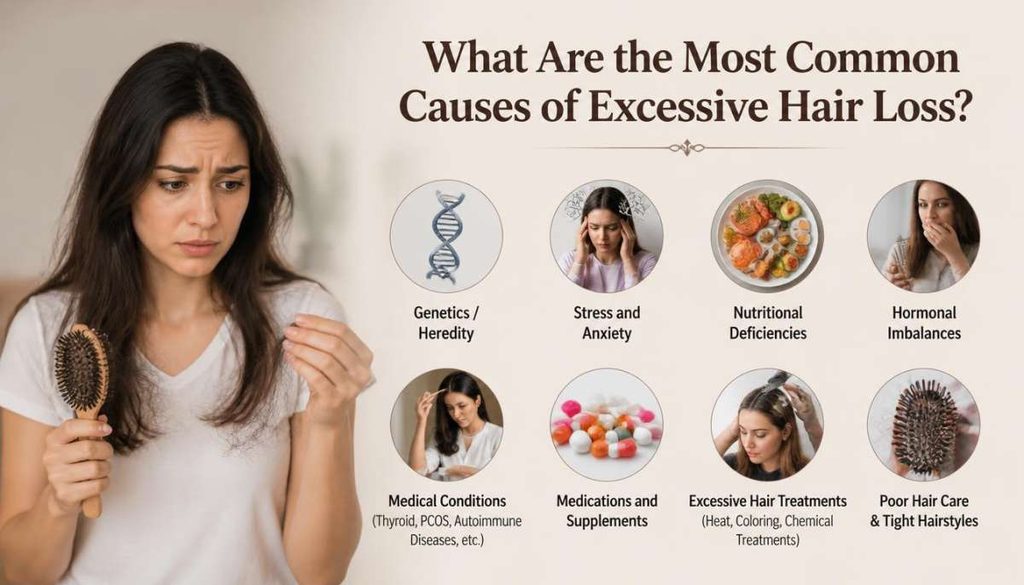
Several different factors can cause hair to fall out more than usual. Sometimes, one factor is responsible. In other cases, more than one cause may be involved.
Hereditary Hair Loss
Genetics is one of the most common causes of hair loss. This type is known as androgenetic alopecia, or hereditary pattern hair loss.
It can affect both men and women, although the pattern often differs.
In men, hair loss commonly begins with a receding hairline or thinning around the crown. In women, it often appears as gradual thinning across the top of the scalp or a widening part.
Hereditary hair loss usually develops gradually rather than causing large amounts of hair to fall out suddenly. Hair follicles become increasingly sensitive to hormonal signals, and the hairs they produce may become finer over time.
A family history can make hereditary hair loss more likely, but the pattern is not always identical among relatives.
Stress and Physical Shock
Stress can affect the hair growth cycle. A condition called telogen effluvium can cause many hairs to enter the resting phase and shed within a relatively short period.
This type of shedding may follow a major physical or emotional event, such as a serious illness, high fever, surgery, childbirth, or significant weight loss.
One confusing detail is that the shedding often does not begin immediately. You may notice substantially more hair falling out several weeks or months after the event that triggered it.
Because of this delay, the cause may not seem connected to what happened earlier.
Telogen effluvium often causes diffuse shedding, meaning hair falls from across the scalp rather than leaving one clearly defined bald patch. It can be temporary, although persistent stress or other ongoing factors may contribute to continued shedding.
Hormonal Changes
Hormones influence several processes in the body, including the hair growth cycle. Changes in hormone levels can therefore affect how much hair a person sheds.
Pregnancy and childbirth are examples. After giving birth, changes in hormone levels can cause more hairs to enter the shedding phase, making hair loss particularly noticeable during the following months.
Menopause can also coincide with changes in hair density and texture. Thyroid disorders, including an underactive or overactive thyroid, may affect hair growth as well.
Polycystic ovary syndrome, or PCOS, can be associated with androgen related hair thinning in some women.
Hormonal hair loss does not look the same in every person. It may cause gradual thinning, increased shedding, or changes in the distribution of hair, depending on the underlying condition.
Nutritional Deficiencies
Hair follicles require adequate nutrition to support normal growth. Certain nutritional deficiencies can contribute to excessive shedding or changes in hair quality.
Iron deficiency is one possible cause, particularly when iron stores become low. Insufficient protein intake and deficiencies involving other nutrients, such as zinc, may also affect hair growth.
However, hair loss alone does not prove that you have a nutritional deficiency. Similar changes can occur for several other reasons.
Significant dietary restriction or rapid weight loss can also affect the body’s supply of nutrients and place physical stress on the system. In these situations, nutritional factors and changes in the hair growth cycle may contribute together.
Tight Hairstyles and Hair Damage
Some types of hair loss develop because the hair is repeatedly pulled or physically damaged.
Tight ponytails, braids, extensions, and other hairstyles that place continuous tension on the hair can cause a condition called traction alopecia.
Early on, the hair may break or thin around areas exposed to the most pulling, such as the hairline. If the tension continues for a long time and damages the follicles, the resulting hair loss can become permanent.
Chemical treatments can cause a different problem. Bleaching, relaxing, and other intensive processes may weaken the hair shaft, making strands more likely to break.
Hair breakage and hair loss are not exactly the same. Breakage happens when the strand snaps, while shedding involves a hair leaving its follicle. Both can make the hair look thinner, but they have different causes.
Autoimmune Conditions
Some forms of hair loss occur when the immune system mistakenly attacks hair follicles.
One example is alopecia areata. This condition often causes sudden, smooth, round or oval patches of hair loss on the scalp. It can also affect the eyebrows, beard, eyelashes, or other areas of the body.
The amount of hair lost varies. Some people develop a few small patches, while others experience more extensive hair loss.
Alopecia areata is different from hereditary thinning and ordinary stress related shedding. Its characteristic pattern can provide a clue, although a healthcare professional may need to examine the scalp to establish the cause.
Medications and Medical Treatments
Certain medications can cause hair shedding as a side effect. Depending on the medication and how it affects the body, hair loss may begin after treatment starts or after a change in dosage.
Some cancer treatments, particularly chemotherapy, can cause rapid and widespread hair loss. Other medications, including certain drugs used for depression, blood pressure, and other health conditions, may contribute to shedding in some people.
Not everyone who takes these medications experiences hair loss, and the timing can vary.
If your hair loss begins after starting a new medication, the timing may be relevant, but it does not prove that the medication is responsible. A healthcare professional can assess the possible connection.
Scalp Infections and Skin Conditions
Problems affecting the scalp can interfere with healthy hair growth.
For example, scalp ringworm is a fungal infection that can cause scaly areas, broken hairs, redness, and patches of hair loss. It may sometimes cause swelling or discomfort as well.
Other inflammatory scalp conditions can be associated with itching, flaking, redness, or tenderness. Some conditions affect the hair follicles directly, while others cause irritation or damage around them.
Scalp symptoms are particularly important when hair loss appears alongside visible changes in the skin. The combination may point toward a different cause than ordinary shedding.’/;
Why Is My Hair Falling Out in Clumps?
Seeing handfuls of hair come out during washing or brushing can be alarming. However, the amount of hair visible at one time does not identify the cause on its own.
One possible explanation is telogen effluvium, in which a larger number of hairs enter the shedding phase around the same period. This may happen after a major illness, surgery, childbirth, significant weight loss, or another physical or emotional stressor.
Hair that has already entered the shedding phase may become noticeable when several strands are washed or handled together.
Medication related shedding and some other medical conditions can also cause substantial hair loss.
If the shedding begins suddenly, continues to increase, or is accompanied by visible thinning, it is worth having the cause assessed rather than assuming it is ordinary hair fall.
Why Is My Hair Thinning Instead of Falling Out Completely?
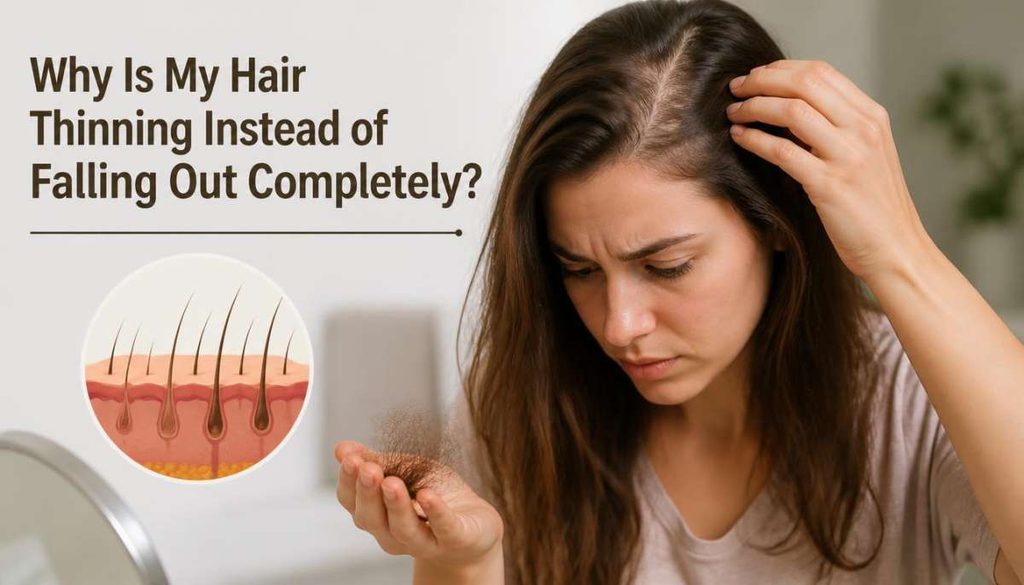
Hair loss does not always involve large amounts of hair coming out at once.
Some conditions gradually change the thickness, density, or growth pattern of the hair. As a result, you may notice that your part looks wider, your scalp is more visible, or your ponytail feels smaller than it used to.
Hereditary pattern hair loss is one possible explanation. Over time, affected follicles produce finer, shorter hairs, so overall coverage decreases.
Other causes, including hormonal changes, thyroid disorders, nutritional deficiencies, and certain scalp conditions, may also contribute to thinning.
The distribution of the thinning can be informative. Gradual thinning around the crown or part may look different from small, clearly defined bald patches or widespread shedding.
However, appearance alone cannot reliably distinguish every cause. Different conditions can sometimes produce overlapping patterns.
When Does Hair Loss Become a Medical Concern?
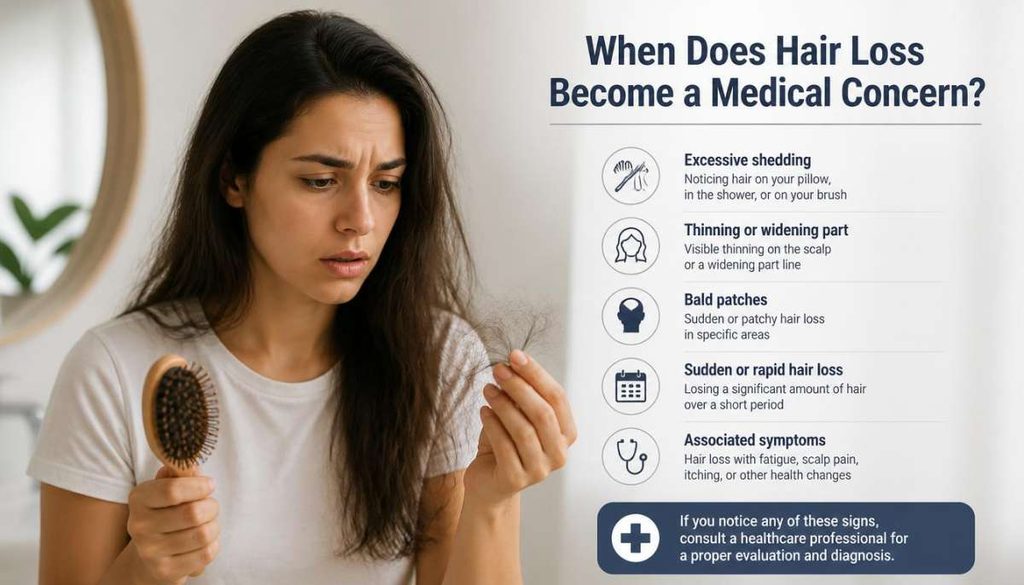
Some daily shedding is expected, but certain changes deserve closer attention.
Sudden hair loss, distinct bald patches, rapidly increasing shedding, or thinning that continues over time may indicate an underlying condition.
Other symptoms can make the cause more concerning. These include scalp pain, persistent itching, redness, scaling, swelling, or broken hairs around affected areas.
Hair loss accompanied by other unexplained changes, such as unusual fatigue or changes in weight, may also warrant medical assessment because it can occur alongside conditions that affect the whole body.
There is no single number of fallen hairs that can determine whether someone has a medical problem. Hair length, washing frequency, and individual hair cycles all affect how much shedding becomes visible.
A healthcare professional or dermatologist can consider the pattern of hair loss, medical history, scalp appearance, and relevant tests to help identify the cause. Sudden or patchy hair loss is particularly worth getting assessed promptly.
Frequently Asked Questions About Why Hair Falls Out So Much
Is it normal to lose hair every day?
Yes. Many people naturally shed around 50 to 100 hairs daily as part of the hair growth cycle. This amount is an estimate rather than a strict limit, and visible shedding varies between individuals.
Why does my hair fall out so much when I wash it?
Washing can make loose hairs more noticeable because strands that have already entered the shedding phase may come away together. However, consistently heavy shedding during washing can also occur with conditions such as telogen effluvium or other forms of hair loss.
Can stress cause hair to fall out months later?
Yes. Stress related telogen effluvium often becomes noticeable weeks or months after the triggering event. A person may not immediately connect the shedding with an earlier illness, stressful experience, or physical change.
Does hair loss always mean I have a vitamin deficiency?
No. Nutritional deficiencies are one possible cause, but hereditary factors, hormonal changes, stress, medications, and scalp conditions can also contribute. Hair loss by itself cannot establish that a vitamin or mineral level is low.
Can thyroid problems cause hair loss?
Yes. Both an underactive thyroid and an overactive thyroid can affect hair growth and contribute to hair loss. Other symptoms and appropriate medical testing help determine whether a thyroid condition is involved.
Why am I losing hair around my hairline?
Hairline thinning can occur with hereditary pattern hair loss or repeated tension from tight hairstyles. Certain inflammatory conditions can also affect the hairline, so the pattern and appearance of the scalp matter.
Can hair loss be temporary?
Yes. Some forms of hair loss, including many cases of telogen effluvium, are temporary. Other forms, particularly longstanding hereditary hair loss or scarring conditions affecting follicles, may be persistent. The outlook depends on the underlying cause.
Should I worry if my hair falls out suddenly?
Sudden hair loss deserves attention, particularly when it occurs in patches, involves large amounts of hair, or comes with scalp symptoms. A medical assessment can help distinguish ordinary shedding from conditions that need specific care.
Understanding Why Your Hair Is Falling Out
If you are wondering why your hair falls out so much, the most important distinction is that hair loss has several possible causes. Genetics may lead to gradual thinning, stress or illness can trigger delayed shedding, hormonal changes can affect the growth cycle, and certain medical conditions can produce patchy or more widespread loss.
The timing, pattern, and other symptoms can help explain what may be happening, but they do not always reveal the cause with certainty.
If the shedding is sudden, persistent, patchy, or accompanied by scalp changes or other physical symptoms, a healthcare professional can help determine the underlying reason. Understanding that cause is more useful than assuming every type of hair loss comes from the same problem.